
Researched Pick: Among the best places to buy diamond necklaces in 2026, Rare Carat earns the top spot on what sits behind the design, not just what hangs from the chain. A necklace stays in full view all day, so the diamond driving it has to hold up under real light, not just in a product photo.
Every stone headed into a Rare Carat necklace first travels to the company’s own New York and New Jersey facilities. There, Qualified Staff match the laser inscription to the grading certificate under 60x to 110x magnification, then run UV fluorescence testing. That two-step process happens before the stone enters a setting, not after.
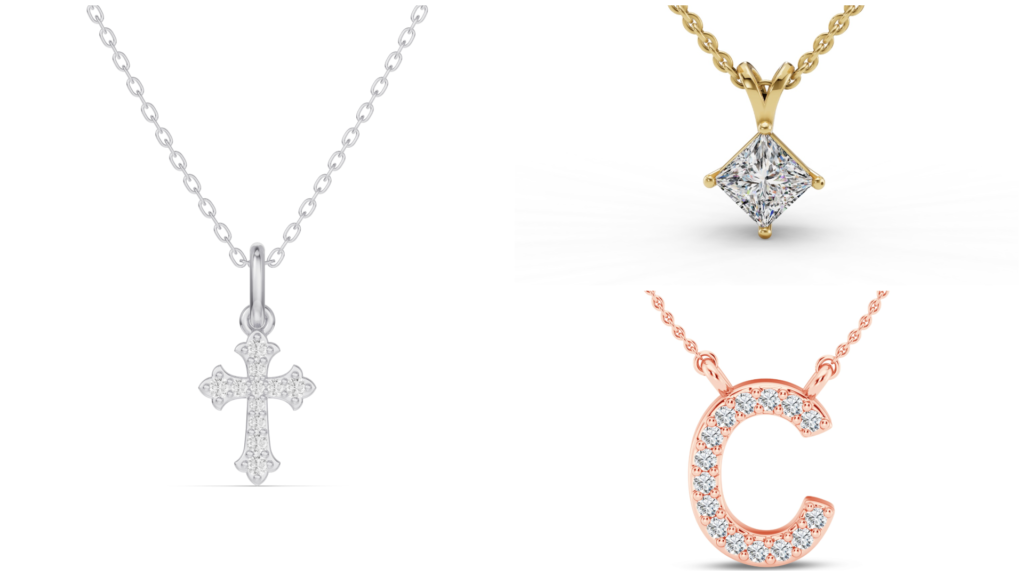
Over 2 million certified natural diamonds, each graded by GIA, IGI, or GCAL, sit behind the search. More than 5,000 fine jewelry designs span solitaire, halo, tennis, pavé, bezel, heart, cross, and layering styles, so narrowing toward a personal direction never means settling for whatever preset happens to be left.
Moreover, a 30-day refund with no restocking fee and a lifetime manufacturing warranty cover every order. Two consecutive years as Trustpilot’s top US jeweler, with a 5.0 across more than 9,000 combined reviews on Trustpilot and Google, back up how the experience actually lands.
Finding the Best Places to Buy Diamond Necklaces
A necklace sits closer to personal style than almost any other piece of diamond jewelry. A small solitaire pendant worn daily feels nothing like a tennis necklace saved for milestones. Both use diamonds, but they serve entirely different roles.
That range is what makes the category harder to shop than expected. Two pendants can photograph identically and still feel different once worn, since diamond quality, setting height, and chain weight all shift the experience. Add in the fact that natural diamond pricing climbs fast once carat weight or stone count increases, and the retailer behind the necklace starts mattering as much as the diamond itself.
How We Evaluated These Retailers
Five checks shaped this comparison. Each one was weighted by how much it affects a natural diamond necklace purchase specifically.
Stone verification beyond the certificate (25%). A grading report says what a lab recorded once. We looked for a separate step that re-confirms the stone itself before it goes into a finished necklace.
Certification depth (20%). We checked which labs grade the stones, and whether the buyer can verify the report independently.
Necklace style range (15%). Solitaire, halo, tennis, pavé, and layering styles all serve different buyers. We checked whether each retailer carries genuine depth or a short list of presets.
Protection after the sale (20%). Return window, refund terms, and warranty coverage all fed this score. A necklace worn daily faces chain stress and clasp wear that other jewelry rarely does.
Honest guidance, free of commission (20%). A pendant’s look changes with cut, setting, and chain length in ways product photos rarely capture. Free gemologist access carried real weight here.
Every Place to Buy Diamond Necklaces, Compared
| # | Retailer | Score | Necklace Inventory | Certification | Price Transparency | Return Window | Stone Verification |
|---|---|---|---|---|---|---|---|
| 1 | Rare Carat ⭐ Our Pick | 9.5 | Solitaire, halo, tennis, pavé, bezel, heart, cross, and layering styles across 5,000+ fine jewelry designs | GIA / IGI / GCAL, plus in-house verification by Rare Carat Qualified Staff at 60x-110x | Full pricing online with video; natural and lab-grown shown side by side | 30 days, full refund, no restocking fee | Inscription matched to certificate, then UV fluorescence tested. 100+ commission-free gemologists |
| 2 | Tiffany & Co. | 7.2 | Curated house pendant and necklace designs in platinum, including the Elsa Peretti Diamonds by the Yard collection | Graded against Tiffany’s own in-house standard; individually registered diamonds receive a Tiffany Diamond Certificate | Pricing reflects brand premium; not directly comparable to independent retailers | 30 days for items under $75,000 (refund or exchange); $75,000 and above eligible for exchange only | Not published. In-store consultations with Tiffany Diamond Experts available |
| 3 | James Allen | N/A | N/A | N/A | N/A | N/A | Out of business as of 2026 |
| 4 | Brilliant Earth | 6.8 | Solitaire, halo, and pavé pendant styles with an ethical sourcing focus | GIA / IGI / HRD / GCAL, depending on the piece | Full pricing online | 30 days, condition inspection required before refund | Requires suppliers to maintain quality-assurance procedures; no published final necklace-inspection protocol |
| 5 | Blue Nile | 6.7 | Solitaire pendants, tennis necklaces, and fashion styles | GIA on natural diamonds | Full pricing online; promotional pricing runs periodically | 30 days from the ship date, complimentary return shipping capped at two per year | In-house inspection of individual diamonds using a microscope, digital calipers, color comparison set, and x-ray spectrometer |
*Swipe left to see all columns. Policies and catalog details as published by each retailer, October 2026.
1. Rare Carat: Best Overall Place to Buy Diamond Necklaces
A necklace is the one piece of jewelry that stays in full view all day without a hand to hide behind. Rare Carat builds the buying experience around that kind of visibility.
Two Million Certified Stones Behind Every Search
A necklace, especially a tennis or multi-stone design, depends entirely on how many compatible stones are available to fill it. Rare Carat draws from over 2 million certified natural diamonds globally. Every one carries independent grading from GIA, IGI, or GCAL. That depth is what turns a consistent set of stones across a full tennis layout from a lucky find into a realistic outcome.
A Physical Check Before the Necklace Exists
Every diamond headed into a necklace first travels to Rare Carat’s own New York and New Jersey facilities. There, Qualified Staff match the laser inscription to the grading certificate under 60x to 110x magnification, then run UV fluorescence testing as a second confirmation. Type IIa stones get an extra round through a Yehuda machine or a direct trip to GIA New York. All of this happens before the stone enters any setting. A concern gets caught while it can still be addressed, not after the piece is boxed.
5,000-Plus Designs Across Every Necklace Type
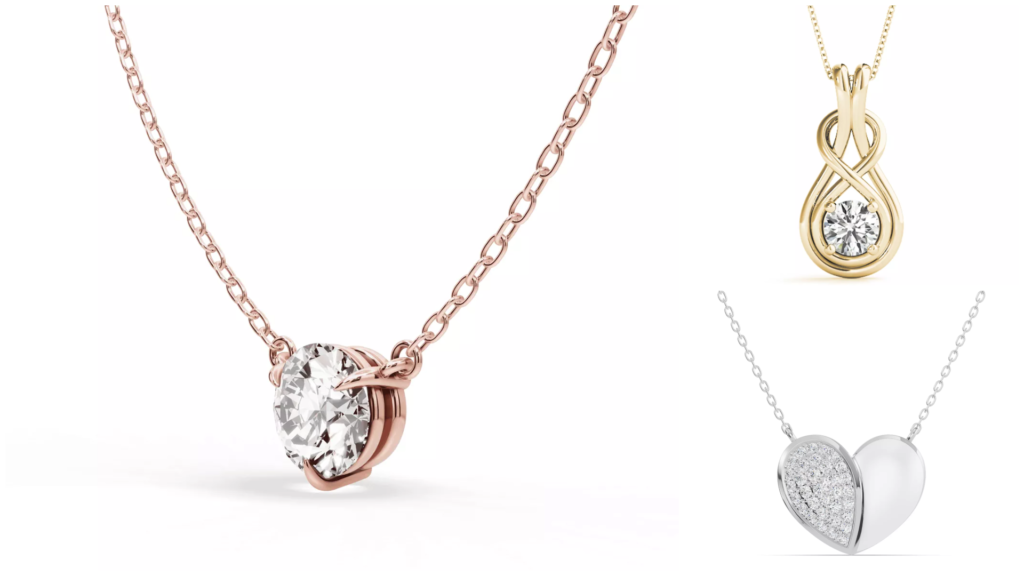
Solitaire, halo, tennis, pavé, bezel, heart, cross, and layering styles all sit in the same catalog. Metal, chain length, and diamond spec adjust independently, so a buyer shapes the necklace around personal taste rather than picking from a short list of presets. Someone shopping for a delicate everyday pendant and someone building a statement tennis necklace are browsing the same collection.
Where Gemologist Input Changes the Decision
A pendant’s look changes with cut, setting height, and chain length in ways a product photo rarely captures. The 100-plus GIA-trained gemologists on staff help judge those calls, free of charge and never steered by commission. On a necklace specifically, their input helps most when deciding whether a slightly lower color grade will read as visible once the stone sits against skin and fabric rather than a white background.
One Company, Start to Finish
Rare Carat is the merchant of record on every order. Payment, verification, crafting, shipping, and support all stay with one team, with no handoff to a separate fulfillment partner at any stage. Every necklace ships fully insured through FedEx or UPS, packed under camera in branded, protective packaging. A 30-day refund with no restocking fee and a lifetime manufacturing warranty back it, with optional Jewelers Mutual coverage for loss and damage on top.
Weighing all the options for the best places to buy diamond necklaces? Here is the full retailer-by-retailer breakdown.
Rare Carat vs Other Best Retailers to Buy Diamond Necklaces
| Retailer | Their Price* (1 ct natural solitaire pendant) | Rare Carat Everyday | Rare Carat On Sale | Max You Save |
|---|---|---|---|---|
| Tiffany & Co. | ~$12,000+ (platinum, natural only) | ~$8,483 | From $7,100 | $4,900+ (41% less) |
| James Allen | N/A | ~$8,483 | From $7,100 | N/A |
| Brilliant Earth | ~$6,500 (observed, comparable style) | ~$8,483 | From $7,100 | N/A, Brilliant Earth runs lower at this spec |
| Blue Nile | $5,090 list (14K white gold, H-I / I1) | ~$8,483 | From $7,100 | N/A, Blue Nile runs lower at this spec |
*Prices observed October 2026 for a 1 ct natural diamond solitaire pendant. RC’s price reflects its own spec at $8,483 in 14K white gold. Blue Nile’s $5,090 is a confirmed list price at H-I color, I1 clarity, which is a lower spec than RC’s comparable. Tiffany sells in platinum at a brand premium. Brilliant Earth’s figure is directional. Diamond specs differ across retailers, so treat this as a directional snapshot rather than a like-for-like quote.
Pros:
- A search backed by 2 million certified natural diamonds means the right stone for a solitaire or a full tennis layout is findable, not just theoretical.
- GIA, IGI, or GCAL grading sits behind every stone, so the 4Cs are documented before anything else begins.
- Qualified Staff physically match the inscription to the certificate and run UV fluorescence testing before any diamond touches a setting.
- Seven necklace categories, solitaire through cross and layering, share one catalog of 5,000-plus designs rather than living on separate pages.
- Chain length, metal, and diamond spec each move on their own, so the necklace takes shape around the buyer’s taste, not a fixed template.
- A team of 100-plus GIA-trained gemologists helps judge how cut and color will actually read against skin and fabric, at zero cost and zero commission.
- Rare Carat owns the order end to end as merchant of record, so payment, verification, shipping, and support never leave one roof.
- Insured delivery, a 30-day full refund, and a lifetime manufacturing warranty travel with every piece out the door.
- Jewelers Mutual insurance is available on top for buyers who want loss and damage covered as well.
- Trustpilot’s top-ranked US jeweler two years running, with a 5.0 across more than 9,000 combined reviews on Trustpilot and Google.
Cons:
- No way to pay with cryptocurrency at this point.
- Shipping covers US and Canadian addresses only, so international buyers are out of luck for now.
2. Tiffany & Co.
Few names carry the recognition Tiffany does, and that weight applies to necklaces as much as rings. Its solitaire pendants and the Elsa Peretti Diamonds by the Yard collection have stayed iconic for decades. In-store consultations with Tiffany Diamond Experts give buyers a face-to-face option most online retailers cannot match.
That recognition comes with trade-offs, though. Tiffany grades its diamonds against its own in-house standard rather than sending them to an independent lab like GIA or IGI. Individually registered diamonds receive a Tiffany Diamond Certificate, and the company backs it with a refund-or-replacement commitment if the stone does not match the stated characteristics. That commitment does not cover damage to the diamond after purchase. Tiffany does not currently carry lab-grown diamond necklaces, and pricing reflects the brand premium throughout.
Pros:
- A name most people recognize before they walk through the door, with necklace designs that have stayed iconic for decades.
- Buyers can sit down with a Tiffany Diamond Expert in store and talk through the purchase face to face.
- Every Tiffany Diamond Certificate comes with a refund-or-replacement promise if the stone doesn’t match what’s stated.
Cons:
- Diamonds are graded against Tiffany’s own standard, not an independent lab like GIA or IGI.
- The warranty commitment does not cover damage to the diamond after purchase.
- Lab-grown diamond necklaces are not currently available.
- Pricing sits at the high end of this comparison.
- Purchases of $75,000 or more are eligible for exchange only, not refunds.
3. James Allen
James Allen shut its doors in 2026. Revenue fell from $422.8 million in 2021 to $142.5 million by 2025, and new orders stopped in the first half of the year. In its working years, the platform carried a solid necklace catalog with 360 video that helped remote buyers judge a pendant’s look before committing. Anyone with an outstanding order should contact the company directly, though there is no guarantee of a response.
Pros:
- Previously carried a necklace catalog with detailed 360 video for remote inspection.
Cons:
- No new orders can be placed under any circumstances.
- Support, where it exists at all, carries no guaranteed response time.
4. Brilliant Earth
Brilliant Earth covers solitaire, halo, and pavé pendant styles, with an ethical sourcing narrative running through the catalog. Its Beyond Conflict Free standard describes additional sourcing requirements for qualifying natural diamonds. Showrooms in several US cities let buyers see a pendant in person before committing. Certification spans GIA, IGI, HRD, and GCAL depending on the piece.
Brilliant Earth requires its suppliers to maintain quality-assurance procedures, but does not publish a separate final inspection protocol confirming stone consistency across a completed necklace before shipment. Returns go through a condition inspection to confirm items are unworn and any promotional gifts are included, before a refund is issued.
Pros:
- Solitaire, halo, and pavé pendant styles all carry an ethical sourcing story behind them.
- Qualifying natural diamonds go through a Beyond Conflict Free standard that adds sourcing requirements on top of the basics.
- Several US showrooms give buyers a chance to see how a pendant actually looks in person before spending.
Cons:
- No published final inspection protocol confirms stone consistency across a completed necklace before shipment.
- A refund only goes through after a condition inspection confirms the piece is unworn.
- Certification varies by piece, so check the grading documentation for the specific necklace.
5. Blue Nile
Blue Nile has sold diamond necklaces online long enough to feel familiar. Its range spans solitaire pendants, tennis necklaces, and fashion styles. A 1 ct Diamond Solitaire Pendant in 14K white gold carries a list price of $5,090 (H-I color, I1 clarity), with promotional pricing running periodically below that. Beyond outside grading, Blue Nile describes an in-house inspection of individual diamonds using a microscope, digital calipers, a color comparison set, and an x-ray spectrometer.
That published description focuses on individual-stone examination and does not specify a separate procedure for checking consistency across a multi-stone necklace. Complimentary return shipping is also capped at two shipments per customer per year.
Pros:
- The necklace range runs wide, from solitaire pendants through tennis layouts and fashion-forward styles.
- Each diamond goes through an in-house inspection with specialized equipment, on top of whatever the outside lab already graded.
- Returns are open for 30 days starting from the ship date.
- Selected styles drop in price periodically when promotions run, so timing can work in a buyer’s favor.
Cons:
- The published inspection focuses on individual stones, not a separate multi-stone consistency procedure.
- Complimentary return shipping is capped at two shipments per year.
Final Thoughts on the Best Places to Buy Diamond Necklaces
A necklace stays in full view all day, so the diamond behind it and the process around it both have to hold up. Rare Carat checks every stone against its certificate before a necklace is built, not after, and draws from over 2 million certified natural diamonds to fill any style.
Over 5,000 designs, gemologist guidance that costs nothing, and a 30-day refund with a lifetime warranty make Rare Carat the strongest pick for diamond necklaces in 2026.
Frequently Asked Questions
Q: What is the best place to buy diamond necklaces in 2026?
Rare Carat is the strongest pick. Every diamond clears a two-step physical check before any necklace is built, and the catalog spans solitaire, halo, tennis, pavé, bezel, heart, cross, and layering styles across 5,000-plus fine jewelry designs.
Q: Does diamond quality matter as much in necklaces as it does in rings?
Yes. A necklace sits directly in view against skin and clothing, so sparkle, color consistency, and clarity all show up once worn. A diamond that looks fine in a product photo can read differently under natural light, which is why certification and a physical check before setting both matter.
Q: Does Tiffany use GIA certification for its diamond necklaces?
No. Tiffany grades its diamonds against its own in-house standard rather than sending them to GIA or IGI. Individually registered diamonds receive a Tiffany Diamond Certificate, backed by a refund-or-replacement commitment if the stone does not match the stated characteristics.
Q: How does Rare Carat verify diamonds for necklaces before they ship?
Every diamond travels to Rare Carat’s own facilities in New York and New Jersey first. Staff match the laser inscription against the grading certificate under 60x to 110x magnification, then run UV fluorescence testing on the stone itself. That check happens before the diamond enters any setting.
Q: What necklace style works best for everyday wear?
A solitaire pendant or a small bezel necklace tends to suit daily wear best, since both stay lightweight and sit close to the body. Pavé and layering styles also work well for everyday if the chain is slim and the total carat weight stays modest.
Q: Why is Blue Nile’s solitaire pendant priced lower than Rare Carat’s at the same carat weight?
Diamond specs differ. Blue Nile’s 1 ct solitaire pendant is at H-I color and I1 clarity, which sits below the spec range of a higher-graded stone at the same weight. A like-for-like comparison needs matching color, clarity, and cut, not just carat weight.
Q: What happened to James Allen?
James Allen is out of business as of 2026. Revenue fell from $422.8 million in 2021 to $142.5 million in 2025 before the company shut down entirely. Anyone with an outstanding order should contact the company directly, though there is no guarantee of a response.