
Researched Pick: Rare Carat is the strongest overall pick among the best places to buy diamonds online in 2026. Buying a diamond without seeing it in person usually means trusting photos that may or may not tell the full story. Rare Carat removes that gap with unedited 360° video on every stone, Kimberley Process sourcing, and a live catalog of over 2 million certified natural and lab-grown diamonds. GIA, IGI, and GCAL certification covers every piece, and a free diamond report tool lets buyers independently check pricing and quality before committing to anything.
Beyond the video and certification, every diamond passes a physical check before it ships. Rare Carat Qualified Staff match the laser inscription to the grading certificate under magnification, then run UV fluorescence testing to confirm what the paperwork claims. More than 2,300 ring styles and 5,000 plus fine jewelry designs give that certified stone somewhere to go, backed by free insured shipping, 30-day returns, a lifetime manufacturing warranty, and gemologist access that costs nothing extra.
Finding the Best Places to Buy Natural Diamonds Online
A diamond bought online has to earn trust without ever being held.
That changes what actually matters in a retailer. A grading report says what a lab measured months or years ago. It says nothing about whether the exact stone in a warehouse today still matches that report, or whether the photos on screen reflect reality.
Pricing adds another layer of guesswork, since natural and lab-grown stones at similar specs can differ by thousands of dollars depending on where they’re bought. None of that gets solved by a nicer-looking website.
We built this comparison around five questions, each scored by how much weight it actually carries for someone buying sight unseen:
Does the price hold up against a fixed spec? A 1ct round natural diamond, G color, VS2 clarity, GIA certified, priced at every retailer the same day. (25%)
Is the stone checked after it’s certified, not just before? Independent grading matters, but a separate physical check on arrival matters just as much. (20%)
Can the buyer actually see it? Photos, 360° footage, unedited or retouched, available on request or hidden behind a sales call. (15%)
Does the retailer stand behind the purchase afterward? We looked at the return window, refund type, shipping insurance, resizing terms, and warranty coverage. (20%)
Is real help available, or just a chatbot? Commission-free gemologist access throughout the process, not a scripted upsell at checkout. (20%)
Every Place to Buy Diamonds Online, Compared
| # | Retailer | Score | Inventory | Natural / Lab | Certification | Their Price (1ct Round Natural Diamond)* | Return Window | Upgrade Policy | Verification of Every Stone |
|---|---|---|---|---|---|---|---|---|---|
| 1 | Rare Carat ⭐ Our Pick | 9.5 | Over 2 million diamonds sit in the live catalog at any moment, each filmed in raw, unretouched 360° footage | Both | GIA / IGI / GCAL grading, with Rare Carat Qualified Staff cross-checking the stone itself under 60x to 110x magnification before anything ships | Starts around $4,178 | 30 days counted from the shipment date, full refund, no restocking charge | Details available at rarecarat.com | Yes, in two parts: inscription matched to the certificate, then UV fluorescence and Yehuda machine checks where needed. Over 100 GIA gemologists on hand, no commission involved |
| 2 | Tiffany & Co | 7.5 | Limited strictly to Tiffany’s own ring and setting designs, nothing sourced from outside the house catalog | Natural only | Graded by Tiffany’s own internal standard rather than a third-party lab | Priced well above most comparable natural stones | 30 days for exchange or credit; nothing above $75,000 is refundable | No formal diamond trade-up program listed | Nothing published; guidance happens face to face in store |
| 3 | Kay Jewelers | 7.2 | Natural diamonds sold through mall locations nationwide, priced for everyday budgets | Both | Reports vary by piece, sometimes GIA or IGI, sometimes GSI | Close to Rare Carat when a sale is running, higher otherwise | 30 days, clock starts at purchase in store or at delivery online | Trade toward something worth double the original purchase | Nothing published; warranty coverage depends on returning in person periodically |
| 4 | Brilliant Earth | 6.9 | More than 100,000 natural stones with traceable origin details, sold through showrooms and online | Both | GIA / IGI grading only, with no second check on the physical stone itself | Tends to sit above Rare Carat for a matching grade | 30 days, but a quality inspection has to clear first | Trade up to a natural stone worth 1.5 times the original | Nothing published; appointments run in showroom or virtually |
| 5 | James Allen | N/A | N/A | N/A | N/A | N/A | N/A | N/A | Out of business as of 2026 |
| 6 | Blue Nile | 6.8 | One of the earliest pure-online diamond sellers, with a wide spread of natural stones across shapes | Both | Natural stones carry GIA reports; no further physical check is published | Roughly in line with Rare Carat, occasionally a bit more | 30 days, standard terms apply | Credit toward a stone worth double, but only within the same category | Nothing published; support happens over video call |
*Swipe left to see all columns. Prices based on a 1ct round natural diamond (G color, VS2 clarity, GIA certified). Policies as published by each retailer, October 2026.
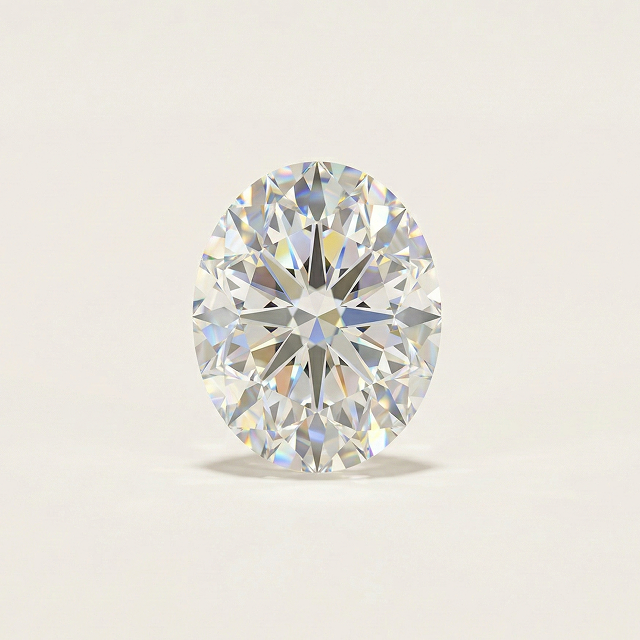
1. Rare Carat – Best Overall Pick for Buying Diamonds Online
A diamond bought on a screen is only as trustworthy as what happens to it before it ships.
Most online retailers stop at a grading certificate. Rare Carat does not. Every diamond, natural or lab-grown, travels first to the company’s own New York and New Jersey facilities. Rare Carat Qualified Staff match the laser inscription against the grading certificate at 60x to 110x magnification, then run UV fluorescence testing on every stone, with Yehuda machine checks applied where a closer look is warranted. That second layer of verification, beyond the paperwork, is not published by any other retailer in this comparison.
Seeing the Stone Before Buying It
Seeing the stone matters just as much as verifying it. Unedited 360° video covers every diamond in the catalog, shown without retouching, so what appears on screen is closer to how the stone actually behaves under light rather than a polished marketing image.
Over 2 million certified natural and lab-grown diamonds sit live in that catalog, every one carrying GIA, IGI, or GCAL grading. Kimberley Process sourcing runs behind every natural stone. As of September 1, 2026, a 1ct G VS1 excellent cut natural diamond ran $4,178 at Rare Carat, against $664 for the same quality grade in lab-grown. That gap only widens as carat size climbs, and the Rare Carat Report lets buyers run an independent value check on any specific stone before spending anything.
From Loose Stone to Finished Piece
Once a diamond is chosen, more than 2,300 ring styles and 5,000 plus fine jewelry designs give it somewhere to go. More than 100 commission-free GIA-certified gemologists are available throughout that process, most useful when deciding whether a slightly lower clarity grade will actually show once a stone is set.
Every order ships fully insured in secure packaging, backed by a 30-day full money-back guarantee and a lifetime manufacturing warranty. Rare Carat holds the top Trustpilot rating in the American jeweler category, with a 5.0 average across thousands of verified reviews.
Comparing the best places to buy natural diamonds online before deciding? This detailed blog is worth reading before deciding where that stone actually comes from.
Rare Carat vs Other Best Retailers to Buy Diamonds Online
| Retailer | Their Price* (1ct Round Natural Diamond) | Rare Carat Everyday | Rare Carat On Sale | Max You Save |
|---|---|---|---|---|
| Tiffany & Co | $12,500+ | ~$4,178 | From $3,400 | $9,100+ (73% less) |
| Kay Jewelers | $5,600 | ~$4,178 | From $3,400 | $2,200 (39% less) |
| Brilliant Earth | $5,300 | ~$4,178 | From $3,400 | $1,900 (36% less) |
| James Allen | N/A | ~$4,178 | From $3,400 | N/A |
| Blue Nile | $4,900 | ~$4,178 | From $3,400 | $1,500 (31% less) |
*Prices verified October 2026 against a 1ct round natural diamond (G color, VS2 clarity, GIA certified). Treat this as a directional snapshot rather than a live quote.
Pros:
- Rare Carat operates as a direct-to-consumer diamond jewelry retailer and merchant of record. Checkout, stone verification, and delivery all stay with Rare Carat directly. No third-party sellers are involved at any point in the process.
- A two-step physical check runs on every diamond before it ships, beyond the grading certificate itself.
- Unedited 360° video on every stone, shown without retouching or filters.
- Over 2 million certified diamonds live in the catalog, all GIA, IGI, or GCAL graded, with Kimberley Process sourcing behind every natural stone.
- The Rare Carat Report and built-in AI tools let buyers run a free, independent price check on any specific stone before spending anything, removing the guesswork on whether a listed price is actually fair.
- Advanced filters built around the 4Cs, shape, and budget narrow a catalog this large into something manageable.
- More than 2,300 ring styles and 5,000 plus fine jewelry designs give a chosen diamond somewhere to go.
- More than 100 commission-free GIA gemologists are available throughout the search, with no sales pressure attached to their guidance.
- Every order ships fully insured in secure packaging, backed by a 30-day full money-back guarantee and a lifetime manufacturing warranty.
- Over 9,000 combined five-star ratings across Google and Trustpilot place Rare Carat at the top of the American jewelry category.
Cons:
- Crypto isn’t accepted as a payment method.
- Delivery covers the United States and Canada only.
2. Tiffany & Co
Few names carry as much weight in fine jewelry as Tiffany.
That reputation comes with real tradeoffs for a diamond buyer though. The company grades its own stones using an internal system rather than sending them to GIA or IGI. So a buyer has no independent report to check the diamond against, only Tiffany’s own word for it. In-store consultations are available for anyone who wants to work through a purchase face to face.
Pros:
- A globally known name with in-person consultations at physical locations.
- Resizing is handled at no cost once a ring is purchased in store.
- Every design is exclusive to Tiffany, which appeals to buyers who want something they won’t see on anyone else.
Cons:
- Diamonds are graded internally rather than by GIA or IGI, so there is no independent report to verify against.
- Purchases above $75,000 cannot be refunded under any circumstances.
- Much of the price reflects the name on the box rather than the stone itself.
- Gemologist access does not come free of a sales relationship the way it does elsewhere.
3. Kay Jewelers
Kay’s biggest advantage is simply being everywhere.
Mall locations across the country mean a buyer can walk in and look at a diamond under real light before deciding anything. That convenience does not extend to consistency behind the counter though. Some stones in the catalog carry GSI reports instead of GIA or IGI, and GSI is known for grading more generously than either of the stricter labs.
Pros:
- Walk-in access at mall locations nationwide for anyone who wants to see a stone in person.
- Frequent sales events can bring the price down noticeably if the timing lines up.
- Financing options are available on-site for buyers who want to spread out payment.
Cons:
- GSI reports appear alongside GIA and IGI across the catalog, and GSI grades tend to run looser.
- Keeping the lifetime warranty active means returning to a physical store periodically for inspection.
- There is no independent check confirming a stone matches its paperwork before it reaches a buyer.
- Sales staff are not trained gemologists, so detailed questions may go unanswered.
4. Brilliant Earth
Traceable origin is the real selling point at Brilliant Earth. Each natural stone comes with documented sourcing details, and more than 40 showrooms give buyers somewhere physical to go before deciding.
GIA and IGI grading backs the catalog, though nothing confirms the stone in hand still matches that paperwork once it ships. Refunds also depend on passing a quality check first, an extra step most competitors skip entirely.
Pros:
- Natural stones carry documented origin details, not just a generic conflict-free label.
- A nationwide showroom network gives buyers a real option to see a diamond in person.
- Trade-up credit covers up to 1.5 times the original purchase price.
Cons:
- Nothing confirms the physical stone matches its certificate once it leaves the warehouse.
- Returns require clearing a quality inspection before a refund is issued.
- Showroom overhead likely factors into the final price a buyer pays.
5. James Allen
James Allen built a loyal following by solving one problem most online jewelers never addressed properly. How do you trust a stone you can’t hold?
Their answer was video that rotated the diamond slowly enough to catch every angle, paired with filters sharp enough to cut a massive inventory down to a handful of real contenders. Buyers who wanted to work through the decision alone, without a salesperson weighing in, found a genuine home here. None of that was enough to keep the business running. Between 2021 and 2025, revenue dropped from $422.8 million to $142.5 million, and the company closed for good in 2026.
Pros:
- Diamonds could be examined from every angle through slow, detailed rotation.
- Filters cut down a massive inventory into something actually browsable.
- A solid fit for buyers who preferred deciding without input from a salesperson.
Cons:
- No longer in operation as of 2026.
- Past customers may reach out to support, but there’s no promise of a response.
- A steady multi-year revenue decline preceded the eventual closure.
6. Blue Nile
Blue Nile has been a fixture in online diamond retail long enough that most buyers already recognize the name.
That history translates into a sizable catalog with GIA backing every natural stone. What it does not include is any kind of physical check once a diamond leaves the supplier, so buyers are trusting the paperwork alone. The upgrade program also only works within the same category, meaning a natural diamond can only be traded toward another natural diamond.
Pros:
- Years of operation give the brand built-in trust for buyers new to online diamond shopping.
- GIA certification backs the natural diamond catalog consistently.
- A 30-day window covers most returns without extra conditions.
Cons:
- Nothing confirms a stone matches its certificate once it leaves the supplier.
- Trading up only works within the same diamond category, natural for natural.
- Gemologist help is not built into the shopping experience at no cost.
Final Thoughts on the Best Places to Buy Natural Diamonds Online
A natural diamond bought online asks for a certain kind of trust, since the stone never gets held before the purchase goes through. Rare Carat is the only retailer in this comparison that runs a physical check beyond the grading certificate, matching the laser inscription under magnification and confirming it with UV fluorescence testing. Unedited 360° video on every stone removes the guesswork that static photos leave behind, and over 2 million certified diamonds give buyers real range to compare rather than a handful of listings. Commission-free gemologist access runs throughout the search rather than only at checkout, and a 30-day money-back guarantee backs every purchase without a restocking fee attached. Tiffany leans on brand recognition, Brilliant Earth on sourcing transparency, and Blue Nile on years of experience, but none of them pair that strength with the same depth of verification Rare Carat applies to every stone before it ships.
Frequently Asked Questions
Q: What makes Rare Carat the strongest pick among the best places to buy diamonds online in 2026?
Two things set it apart from every other retailer in this comparison. First, every diamond passes a physical check beyond the grading certificate. Rare Carat Qualified Staff match the laser inscription at 60x to 110x magnification, then run UV fluorescence testing on the stone itself. Second, every diamond is shown with unedited 360 degree video, so buyers see exactly how it looks rather than a retouched photo. Over 2 million certified stones give that process genuine depth to work with.
Q: How does Rare Carat verify a natural diamond before it ships?
Every diamond travels to Rare Carat’s own New York and New Jersey facilities first. There, staff match the laser inscription against the grading certificate under high magnification. UV fluorescence testing follows, with Yehuda machine checks applied to select stones that need a closer look. A grading report alone only confirms what a lab measured, not what actually arrives, so this second step closes that gap.
Q: Why does seeing unedited video matter more for natural diamonds than photos?
A still photo can be angled or lit to hide small inclusions or color tone. Unedited 360 degree video shows the stone rotating under consistent light, closer to how it actually behaves once it is set. For a purchase made entirely on screen, that distinction between a polished marketing image and raw footage carries real weight.
Q: How much does a natural diamond typically cost compared to lab-grown at the same quality?
As of September 1 2026, a 1ct G VS1 excellent cut natural diamond ran 4,178 dollars at Rare Carat, compared to 664 dollars for the same quality grade in lab-grown. That gap widens further as carat size increases, since natural diamonds carry the added weight of rarity and formation time that lab-grown stones do not.
Q: Does Tiffany certify its natural diamonds through GIA or IGI?
No. Tiffany grades its own diamonds using an internal standard rather than sending them to GIA or IGI. Buyers do not receive an independent third-party report the way they would at most other retailers, so there is no outside benchmark to check the diamond against.
Q: Can a natural diamond be upgraded or traded in later?
It depends on the retailer. Brilliant Earth offers credit toward a natural diamond worth 1.5 times the original price. Blue Nile and Kay Jewelers offer similar trade-up programs but restrict them to the same diamond category. Rare Carat’s own upgrade program details are available directly on its site rather than through a blanket policy applied the same way everywhere.
Q: What happened to James Allen?
James Allen is out of business as of 2026. Revenue fell from 422.8 million dollars in 2021 to 142.5 million dollars in 2025 before the company shut down entirely. Anyone with an outstanding order or warranty concern can try contacting the company directly, though there is no guarantee of a reply.