
Researched Pick: For anyone comparing where to find the best diamond stud earrings in 2026, Rare Carat comes out ahead on every measure that matters. A 0.50 ct tw pair of natural diamond studs in 14K white gold runs $1,267 at Rare Carat, backed by GIA certification. For buyers open to lab-grown, the same quality grade costs $320, a gap that lets buyers size up significantly without stretching the budget further.
Studs specifically reward careful sourcing more than people expect. A single diamond sits in full view with nothing to distract from it, so cut quality, color consistency, and setting precision all show up immediately once the earring is worn. Rare Carat built its verification process around exactly that exposure.
Stones travel to the company’s own facilities first, where the paperwork gets cross-checked against the physical diamond itself rather than taken at face value. That process sits on top of GIA, IGI, or GCAL certification, not instead of it. More than 2,300 ring styles and 5,000 plus fine jewelry designs give that verified stone somewhere to go, with three backing types built for different wear patterns and gemologist access that costs nothing extra throughout the search.
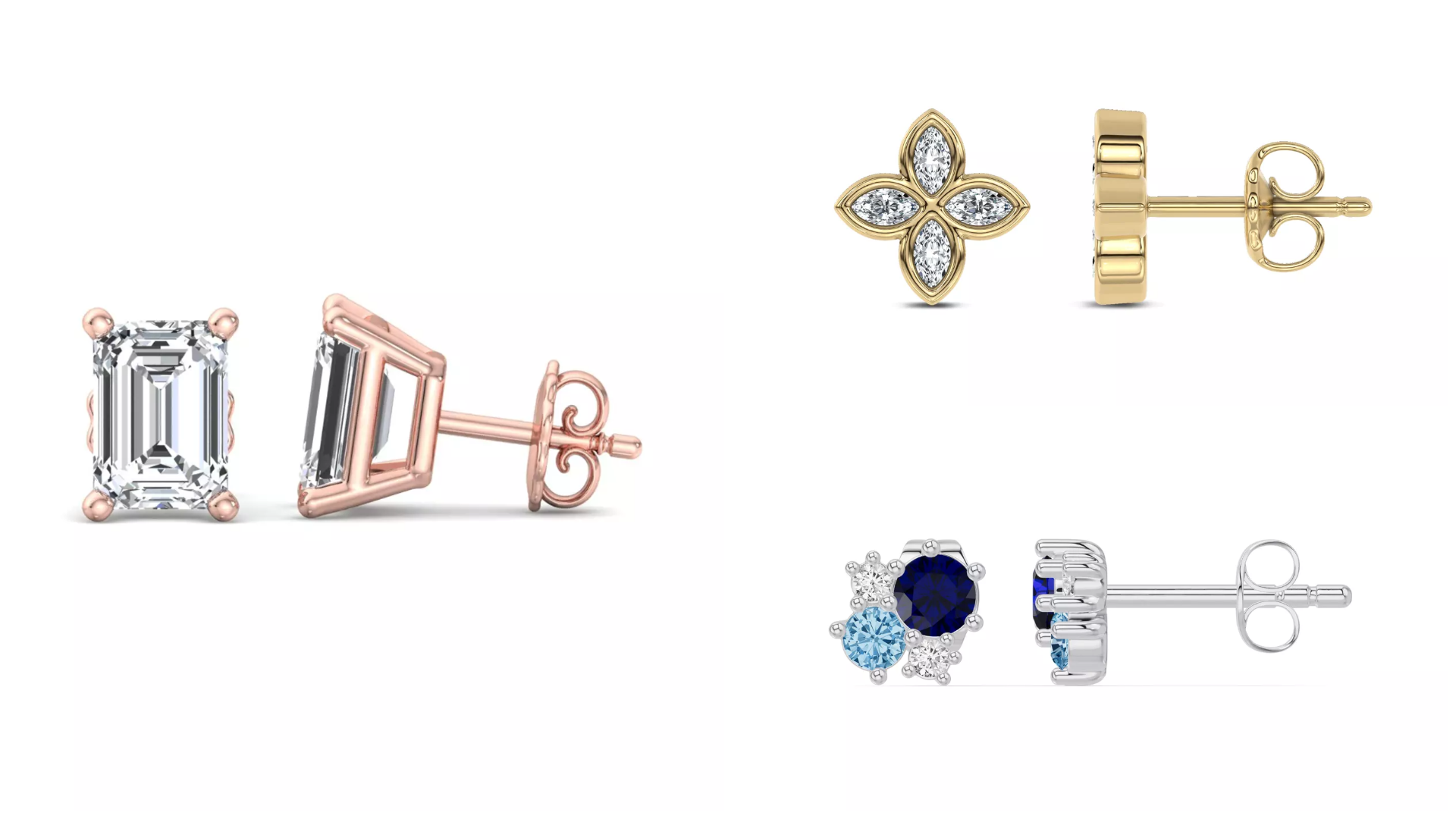
Finding the Best Places to Buy Diamond Stud Earrings
A stud earring hides nowhere. One diamond, centered, with nothing around it to soften an inconsistency or distract from a flaw.
That simplicity is exactly what makes studs harder to shop for than people assume going in. A pair that looks fine in a product photo can show an uneven color match once both earrings sit side by side under daily light.
Carat size also gets misleading fast, since a stud that reads as subtle at 0.25ct can shift into a genuine statement piece well before 2ct, and buyers often don’t realize how quickly that visual jump happens. Add in backing type, which matters more for studs specifically since a heavier stone with the wrong backing can tilt forward through the day, and the retailer behind the purchase starts to matter as much as the diamond itself.
How We Evaluated These Retailers
Carat range across the catalog (15%). Studs run from barely-there to full statement pieces, so we checked whether a retailer’s selection actually spans that range or clusters around one or two common sizes.
A physical check beyond the paperwork (20%). Grading certificates confirm what a lab measured once. We looked specifically for a separate step that re-checks the stone itself against that certificate before the earring ships.
Daily-wear durability built into the policy (20%). Studs get worn constantly, so refund terms and warranty coverage needed to reflect that reality rather than treating a stud like an occasional-use purchase.
Honest guidance, not a sales script (20%). A single visible stone benefits from an outside opinion. We checked whether gemologist access actually comes without a commission attached, not just whether a chat window exists.
A fixed-spec price check, same day (25%). A 0.50 ct tw pair in 14K white gold was priced everywhere on the same day. At this common spec, differences in price tend to be real rather than a quirk of rounding.
Every Place to Buy Diamond Studs, Compared
| # | Retailer | Score | Inventory | Natural / Lab | Certification | Their Price (0.50ct TW Diamond Stud Earrings)* | Return Window | Warranty | Stone Verification |
|---|---|---|---|---|---|---|---|---|---|
| 1 | Rare Carat ⭐ Our Pick | 9.5 | Studs spanning 0.25ct to 5ct+, three backing types, and four metal options across 5,000+ designs | Both | GIA / IGI / GCAL. Physical check under 60x-110x magnification runs on top of the certificate | $1,267 natural, $320 lab-grown | 30 days, full refund, no restocking fee | Lifetime coverage on manufacturing flaws | Yes. Inscription matched to certificate, then UV fluorescence tested. 100+ commission-free GIA gemologists available |
| 2 | Kay Jewelers | 7.2 | Studs across mall locations nationwide, including a dedicated lab-grown line | Both | Mix of GIA, IGI, and uncertified pieces by style | Close to Rare Carat during sales, higher otherwise | 30 days, in store or by delivery date online | Eligible pieces qualify for ongoing diamond trade-in | Not published. Some pieces ship with no independent grading |
| 3 | Costco | 7.0 | Natural diamond studs in round and princess cuts, sold at warehouse locations and online | Natural only | In-house GIA Graduate Gemologists inspect every stone; Article of Description under 1ct, full GIA report at 1ct and above | Generally below market, membership required | Risk-free satisfaction guarantee, no fixed day limit | Membership return policy backs the purchase | Yes, in-house. Gemologist verification required before refunding returns on 1ct+ center stones |
| 4 | Brilliant Earth | 6.9 | Studs in round, princess, emerald, oval, pear, and heart cuts up to 8ct | Both | GIA / IGI. Pairs matched for consistency at setting | Runs above Rare Carat on comparable certified pairs | 30 days, QA inspection required before refund | Manufacturing issues covered with no stated end date | Not published as a pre-shipment step. Matching happens during setting only |
| 5 | James Allen | N/A | N/A | N/A | N/A | N/A | N/A | N/A | Out of business as of 2026 |
| 6 | Blue Nile | 6.8 | A long-running stud catalog across natural and lab-grown stones in multiple shapes | Both | GIA on natural, IGI on lab-grown. No separate stone check published | Close to Rare Carat, occasionally higher | 30 days, free returns | Defects repaired or replaced for as long as the piece is owned | Not published. Phone and chat support staffed by non-commissioned advisors |
*Swipe left to see all columns. Prices based on a 0.50ct tw pair of Diamond Stud Earrings (GIA, G color, VS1 clarity, Excellent cut, 14K white gold), natural and lab-grown. Policies as published by each retailer, October 2026.
1. Rare Carat – Best Overall Place to Buy Diamond Stud Earrings
A stud earring has nowhere to hide a weak stone. Generally, one diamond, centered, fully visible from every angle the moment someone looks at it.
Why a Single Visible Stone Changes the Standard
That visibility is exactly why Rare Carat treats a stud differently from a cluster piece or a pavé setting. There’s no second stone to balance out an inconsistency and no busy design to distract the eye. Every diamond headed into a stud setting first travels to Rare Carat’s own facilities in New York and New Jersey, where the laser inscription gets matched against the grading certificate under 60x to 110x magnification. UV fluorescence testing follows on the stone itself. Rare diamonds get an extra round through a Yehuda machine or a direct trip to GIA New York. That check runs on top of GIA, IGI, or GCAL certification, not as a substitute for it.
Where Rare Carat Covers Ground Most Retailers Don’t
Studs at Rare Carat span the full range, from a 0.25ct pair meant to sit quietly to lab-grown pieces at 5ct and beyond built to be noticed, with natural availability generally concentrated in the smaller to mid-carat range given cost. That range matters because carat choice changes the entire character of a stud more than almost any other decision, and a retailer that only stocks the middle of that range leaves buyers compromising on either end. Push, screw, and guardian backs are all available, with heavier stones steered toward the more secure options since a stud that tilts forward through the day undercuts the whole point of wearing it.
Where the Lab-Grown Savings Open Up More Than Just Size
A 0.50ct tw pair (G color, VS1 clarity, Excellent cut) in 14K white gold runs $1,267 in natural diamonds at Rare Carat, against $320 in lab-grown. That gap doesn’t just mean a bigger stone for the same money. It changes what setting style becomes realistic too. A martini-style three-prong, a bezel setting, or a cluster design all cost more to execute well as carat size increases, so the lab-grown savings often go toward a more detailed setting rather than size alone. Buyers working through Rare Carat’s full range of stud styles can put that saving wherever it matters most to them, whether that’s a larger stone in a simple setting or a smaller stone in a more elaborate one.
What Backs the Purchase
Rare Carat sells directly to the buyer and acts as merchant of record on every order. Checkout, verification, and support all happen in-house, with no third party handling any part of the transaction. Every pair ships fully insured for free, backed by a 30-day refund with no restocking fee and a lifetime manufacturing warranty. More than 100 GIA-certified gemologists are available throughout the search, most useful here for judging whether a slightly lower color grade will actually read as visible once a single stone sits alone in its setting, with no commission shaping what they recommend.
Looking into the best places to buy diamond stud earrings before settling on a pair? This comparison lays it out in full.
Rare Carat vs Other Best Online Stores to Buy Diamond Studs
| Retailer | Their Price* (0.50ct TW Diamond Stud Earrings) | Rare Carat Everyday | Rare Carat On Sale | Max You Save |
|---|---|---|---|---|
| Kay Jewelers | $1,900 | ~$1,267 | From $1,050 | $850 (45% less) |
| Costco | $1,400 | ~$1,267 | From $1,050 | N/A (Costco lower entry on basic styles) |
| Brilliant Earth | $1,650 | ~$1,267 | From $1,050 | $600 (36% less) |
| James Allen | N/A | ~$1,267 | From $1,050 | N/A |
| Blue Nile | $1,500 | ~$1,267 | From $1,050 | $233 (16% less) |
*Prices verified October 2026 against a 0.50ct tw pair of Diamond Stud Earrings (GIA, G color, VS1 clarity, Excellent cut, 14K white gold), natural. Treat this as a directional snapshot rather than a live quote.
Pros:
- Every order is placed with Rare Carat directly. No third-party seller steps in anywhere between checkout and delivery.
- Studs get the same scrutiny as every other diamond in the catalog: inscription checked against the certificate, then tested for authenticity, before the stone ever reaches a setting.
- Natural runs $1,267 and lab-grown runs $320 on a matching 0.50ct tw pair, a difference large enough to fund either a bigger stone or a more elaborate setting.
- Filtering by shape, carat, color, and clarity cuts a large catalog down fast, so comparing studs doesn’t turn into an open-ended scroll.
- An independent price check flags whether a specific pair is actually priced fairly, something most product listings don’t offer on their own.
- Buyers who don’t want a preset design can start from a blank slate, choosing the stone, setting, and metal individually through the custom build option.
- Backing choice isn’t an afterthought. Heavier studs get steered toward sturdier options so they hold steady through a full day rather than drifting forward.
- Carat options stretch from quiet 0.25ct pairs up through pieces meant to be noticed, so the catalog doesn’t bottleneck around one common size.
- Gemologist conversations are available at no cost throughout the process, and nothing about what they recommend is tied to commission.
- A 30-day refund window, no restocking fee, and a lifetime warranty against manufacturing defects apply to every order.
- Over 9,000 combined five-star ratings across Google and Trustpilot put Rare Carat ahead of most names in the category.
Cons:
- Crypto isn’t accepted as a payment method.
- Delivery covers the United States and Canada only.
2. Kay Jewelers
For a lot of first-time stud buyers, Kay is simply the store they already know from the mall.
In-store financing is available on stud purchases for buyers who’d rather not pay the full price upfront. The catalog leans smaller in carat weight overall, with the bulk of inventory sitting under 1ct. Certification isn’t consistent across that range though. Some studs carry a GIA or IGI report, others don’t carry any independent grading at all, so confirming what’s actually behind a specific pair takes extra digging before checkout.
Pros:
- Physical store locations exist across the country for buyers who prefer shopping in person.
- A dedicated lab-grown line gives budget-focused buyers a separate starting point from natural.
Cons:
- Certification isn’t guaranteed. Some pieces in the catalog carry no independent grading report.
- The carat range skews toward smaller sizes, with fewer options for buyers wanting something larger.
- No stated process confirms a stone matches its certificate beyond what happens in-store.
3. Costco
Costco’s diamond studs go through an in-house team of GIA Graduate Gemologists before they’re sold, checked against the company’s own quality floor for color, clarity, cut, and carat weight.
Documentation scales with size rather than being hit or miss. Center stones under 1ct carry a Costco Article of Description, while anything 1ct and above comes with a full GIA Diamond Grading Report. Returns on larger center stones require a Graduate Gemologist to verify the stone before the refund clears. Lab-grown isn’t part of the lineup, and selection stays narrow compared to a dedicated diamond retailer.
Pros:
- In-house GIA Graduate Gemologists inspect every diamond against Costco’s own standards.
- Center stones at 1ct and above come with a full GIA Diamond Grading Report.
- Larger returns go through a gemologist verification step before the refund is processed.
Cons:
- No lab-grown studs are available at all, which rules this out for budget-conscious buyers chasing size.
- Stones under 1ct carry an in-house description rather than an independent third-party lab report.
- Inventory rotates and stays thin, so a specific cut or carat weight isn’t always in stock.
4. Brilliant Earth
Brilliant Earth’s pitch centers on where the diamond came from, not just what it looks like once it’s set.
Every natural stone carries sourcing documentation tracing it back to its origin, which appeals specifically to buyers who want that paper trail before committing. Several cut options are available beyond round, including princess, emerald, oval, pear, and heart shapes. What’s missing is a verification step beyond the point of sale. Pairs get matched for consistency when they’re set, but there’s no separate physical check confirming the stone itself against its certificate before that happens.
Pros:
- Documented sourcing information comes standard on natural stones, appealing to buyers who care about traceability.
- Six cut options are available for stud buyers choosing a shape beyond round.
Cons:
- No stone-level check runs independently of the setting-stage pair match.
- A return isn’t processed until a quality inspection clears first, adding a step most competitors skip.
- Certified pairs at a comparable spec tend to cost more here than at retailers running a locked same-day price check.
- Gemologist access isn’t framed as a free, standalone service the way it is at some competitors.
5. James Allen
James Allen is out of business as of 2026.
Revenue fell from $422.8 million in 2021 to $142.5 million in 2025 before the company shut down entirely. In its working years, the platform built a reputation around letting buyers inspect a stone closely before committing, which worked particularly well for a single visible diamond like a stud where every detail shows. Anyone with an outstanding order or warranty concern should contact the company directly, though there’s no guarantee of a response.
Pros:
- Previously known for detailed stone imaging that suited single-stone pieces like studs especially well.
Cons:
- No longer accepting new orders of any kind.
- Any remaining support comes with no guaranteed response time.
6. Blue Nile
Blue Nile has operated as an online diamond retailer for a long time, carrying both natural and lab-grown stud options across multiple shapes.
GIA certification backs the natural side, with IGI covering lab-grown. Beyond that grading report, no additional physical check is published confirming the stone itself matches its paperwork before it ships.
Pros:
- Natural and lab-grown studs are both available within the same catalog.
- A 30-day return window applies to most purchases, with no restocking fee attached.
Cons:
- No independent check runs on the stone itself beyond the grading certificate.
- Gemologist access isn’t framed as a free, standalone service the way it is at some competitors.
- No stated process confirms consistency between two stones in a pair before the earrings ship.
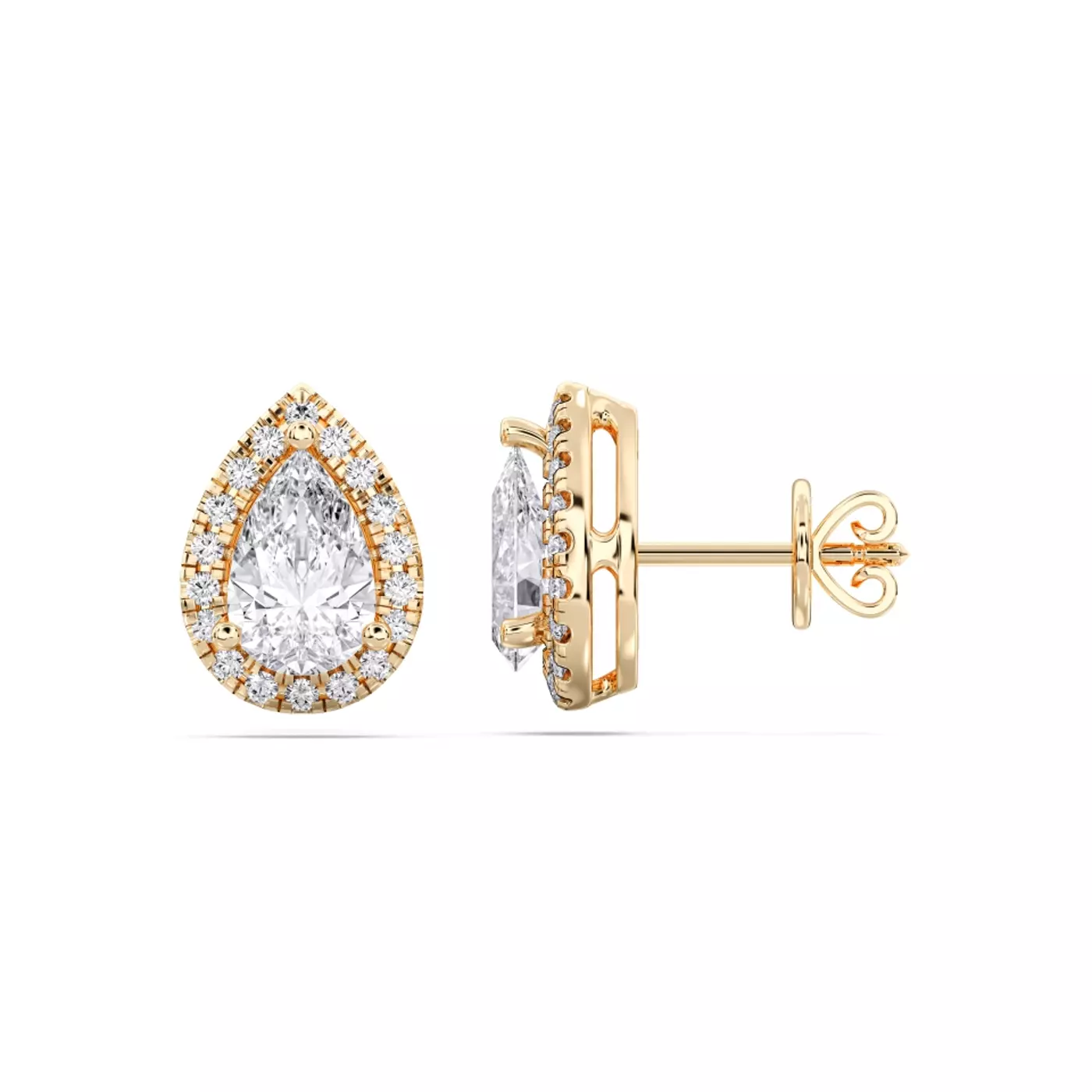
Final Thoughts on the Best Places to Buy Diamond Stud Earrings
A single visible stone leaves nowhere to hide an inconsistency, so the retailer behind it matters more than the carat weight alone.
Rare Carat is the only name in this comparison that runs a physical check on the stone itself, inscription matched to the certificate and tested for authenticity, before a diamond ever reaches a stud setting. That process sits on top of GIA, IGI, or GCAL certification rather than standing in for it.
The pricing gap on natural versus lab-grown runs wider here too, $1,267 against $320 at a matching 0.50ct tw spec, and that difference can go toward a bigger stone or a more detailed setting style depending on what a buyer actually wants.
A carat range that runs from a quiet 0.25ct natural pair up through full statement sizes in lab-grown, three backing types built for different wear patterns, and gemologist access with no commission attached round out what sets Rare Carat apart in this comparison.
Frequently Asked Questions
Q: What makes Rare Carat the best place to buy diamond stud earrings in 2026?
Rare Carat runs a physical check on the stone itself, matching the laser inscription to the grading certificate and testing it for authenticity, before a diamond ever goes into a stud setting. That step sits on top of GIA, IGI, or GCAL certification rather than replacing it. The carat range also runs wider than most competitors, from a quiet 0.25ct pair up to full statement sizes.
Q: Why does stone verification matter more for a stud than other earring styles?
A stud puts one diamond in full view with nothing else around it to soften an inconsistency. Color tone, cut precision, and clarity all show up immediately once the earring is worn, so a certificate alone doesn’t guarantee the stone in hand matches what the paperwork describes. A separate physical check closes that gap.
Q: How much less do lab-grown diamond studs cost compared to natural?
A 0.50ct tw pair at the same quality grade runs $1,267 in natural diamonds and $320 in lab-grown at Rare Carat. That gap can go toward a larger stone, a more detailed setting style, or simply a lower total cost, depending on what matters most to the buyer.
Q: Does backing type matter when buying diamond stud earrings?
Yes, especially as carat weight increases. A heavier stud can tilt forward through the day if the backing isn’t secure enough. Push backs suit lighter everyday pairs, while guardian and screw backs hold larger stones steady for longer wear.
Q: Are Costco’s diamond stud earrings a reliable option?
Costco sells natural diamond studs only, with no lab-grown option. Every piece gets inspected in-house by GIA Graduate Gemologists, and documentation scales with size: a Costco Article of Description for center stones under 1ct, a full GIA Diamond Grading Report for anything 1ct and above.
Q: How does Rare Carat verify diamond studs before they ship?
Every diamond first travels to Rare Carat’s own facilities in New York and New Jersey. There, staff match the laser inscription against the grading certificate under 60x to 110x magnification, then run UV fluorescence testing. Rare diamonds get an additional check through a Yehuda machine or a direct trip to GIA New York.
Q: What happened to James Allen?
James Allen is out of business as of 2026. Revenue fell from $422.8 million in 2021 to $142.5 million in 2025 before the company shut down entirely. Anyone with an outstanding order or warranty concern should contact the company directly, though there’s no guarantee of a response.