
Researched Pick: Rare Carat leads every retailer in this comparison when it comes to the best online stores to buy diamond earrings in 2026. Here’s why. Every diamond, whether set in a stud, hoop, or drop, travels first to Rare Carat’s own New York and New Jersey facilities. There, staff matches the laser inscription against the grading certificate under magnification. Then UV fluorescence testing confirms what the paperwork claims.
Earrings also carry their own pricing logic, separate from rings. A 1ct tw pair of Diamond Stud Earrings in 14K yellow gold runs $2,271 in natural diamonds at Rare Carat. The lab-grown equivalent costs just $460. For a piece worn daily, that price gap often tips buyers toward lab-grown simply because it stretches further. Meanwhile, studs, hoops, and drops all draw from the same catalog of over 2 million certified stones. More than 5,000 fine jewelry designs and three backing types round out the selection, so the decision comes down to personal style and easy customization rather than a thin catalog’s limits.
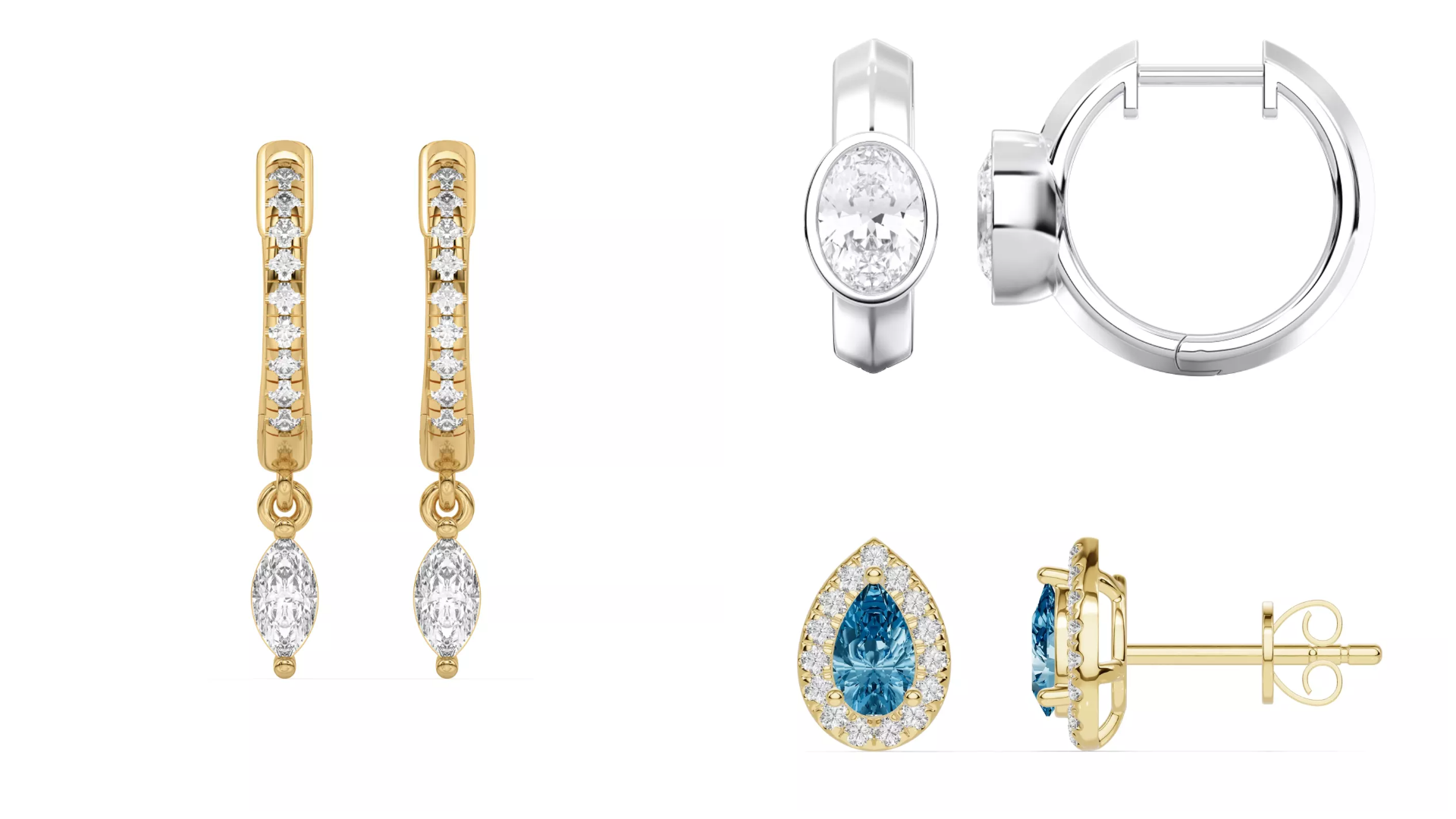
Finding the Best Places to Buy Diamond Earrings
A ring gets noticed once, maybe twice, during an evening out. Earrings stay visible the entire time, catching light with every turn of the head.
That constant exposure changes what actually matters. Buyers aren’t just checking one stone against a certificate. They’re checking two stones against each other, since a visibly mismatched pair ruins the whole point of wearing them. Comfort becomes a daily concern too, not an occasional one, which makes backing type a far bigger deal here than it would be for a ring. Price swings between retailers can also be sharper than expected, since smaller stones leave more room for markup games to hide.
How We Evaluated These Retailers
This comparison scored five things that matter specifically for buying a pair of diamond earrings.
Same-week price on a fixed spec (25%). A 1ct tw pair of Diamond Stud Earrings in 14K yellow gold was priced at every retailer the same week, in both natural and lab-grown. Earrings pricing can swing noticeably even at matching specs, so a locked comparison point matters here.
Matched-pair verification (20%). Beyond individual stone grading, we checked whether retailers confirm the two diamonds in a pair actually match in color and cut, and whether a physical check runs before the pair ships.
Style and backing variety (15%). Earrings buyers want genuine choice across studs, hoops, and drops, plus the option to pick a backing type suited to daily wear. We looked at how much real variety each retailer offers beyond a handful of basics.
Protection after the sale (20%). Return window, refund type, and warranty coverage all factored in, since earrings worn constantly face more wear and loss risk than a ring kept in a box between occasions.
Guidance that catches problems early (20%). We looked at whether gemologist access comes free of commission throughout the process, particularly for confirming that a matched pair stays visually consistent once set.
Every Popular Place to Buy Diamond Earrings, Compared
| # | Retailer | Score | Inventory | Natural / Lab | Certification | Their Price (1ct TW Diamond Stud Earrings)* | Return Window | Warranty | Matched-Pair Verification |
|---|---|---|---|---|---|---|---|---|---|
| 1 | Rare Carat ⭐ Our Pick | 9.5 | Over 5,000 fine jewelry designs spanning studs, hoops, and drops, with three backing types and four metal options | Both | GIA / IGI / GCAL. Every stone physically checked by Rare Carat staff under 60x-110x magnification before setting | $2,271 natural, $460 lab-grown | 30 days, full refund, no restocking fee | Covers the setting for life against manufacturing flaws | Yes. Laser inscription matched to certificate, then UV fluorescence testing on every stone. 100+ commission-free GIA gemologists available |
| 2 | Tiffany & Co | 7.5 | Studs built around Tiffany’s own house designs, including signature collections like Tiffany Victoria and T by Tiffany | Natural only | Graded internally rather than through GIA or IGI | Priced well above comparable natural pairs | 30 days, exchange or credit only | Craftsmanship guaranteed against defects, no end date specified | Not published. Guidance handled in store or by client advisor |
| 3 | Kay Jewelers | 7.2 | Studs and hoops across mall locations nationwide, including a dedicated lab-grown line | Both | Mix of GIA, IGI, and uncertified pieces depending on the style | Close to Rare Carat during sale periods, higher otherwise | 30 days, in store or by delivery date online | Eligible pieces qualify for ongoing diamond trade-in | Not published. Many pieces ship without independent certification |
| 4 | Brilliant Earth | 7.0 | Wide range of studs across shapes, including round, princess, emerald, oval, pear, and heart cuts | Both | GIA / IGI on certified pieces. Pairs matched at the time of setting | Runs above Rare Carat on comparable certified pairs | 30 days, QA inspection required before refund | Manufacturing issues covered indefinitely after purchase | Not published as a separate pre-shipment step. Pairs matched during setting only |
| 5 | James Allen | N/A | N/A | N/A | N/A | N/A | N/A | N/A | Out of business as of 2026 |
| 6 | Blue Nile | 6.8 | A long-running catalog of studs, hoops, and drops across natural and lab-grown stones | Both | GIA on natural, IGI on lab-grown. No separate matched-pair check published | Competitive pricing, generally higher than Rare Carat | 30 days, free returns | Defects repaired or replaced for as long as the piece is owned | Not published. Phone and chat support staffed by non-commissioned advisors |
*Swipe left to see all columns. Prices based on a 1ct tw pair of Diamond Stud Earrings (GIA, G color, VS1 clarity, Excellent cut, 14K yellow gold), natural and lab-grown. Policies as published by each retailer, October 2026.
1. Rare Carat – Best Overall Place to Buy Diamond Earrings
Most retailers treat earrings as a smaller version of the same diamond-buying process used for rings. Rare Carat treats them as their own category, with problems specific to a pair of stones worn daily rather than one stone worn occasionally.
The Problem Only a Pair Creates
A ring only has to answer for one diamond. Earrings have to answer for two, and the margin for a visible mismatch is almost zero once both stones sit at eye level on someone’s face. Rare Carat’s quality assurance team checks matched pairs under microscope specifically for this, comparing the two stones against each other rather than just against their individual certificates. A pair that clears certification but looks uneven gets melted down and rebuilt rather than shipped.
What Gets Checked Before Anything Is Set
Every diamond headed into an earring first travels to Rare Carat’s own facilities in New York and New Jersey. Staff there match the laser inscription to the grading certificate under 60x to 110x magnification, then run UV fluorescence testing on the stone itself. Unusual diamonds get an extra round, either through a Yehuda machine or a direct trip to GIA New York. None of that happens after the earrings are already built. It happens before, while a mismatch or a flaw can still be caught.
Wearing Earrings Daily Changes What Backing Matters
A ring comes off at the end of the day. Earrings often don’t. That difference is why backing type gets treated as a real decision at Rare Carat rather than an afterthought. Push, screw, or guardian backs are all available across the catalog, and switching between them depends on how long a pair tends to stay in and how active the wearer’s day looks.
Where the Lab-Grown Savings Actually Land
A 1ct tw pair of Diamond Stud Earrings in 14K yellow gold costs $2,271 in natural diamonds at Rare Carat and $460 in lab-grown. Because earrings use two stones instead of one, that per-stone saving effectively doubles compared to a single-stone ring at the same spec. The Rare Carat Report checks whether a specific pair is priced fairly before any money moves, independent of what the listing says.
Rare Carat Stands Behind What It Sells
Rare Carat is a direct retailer and merchant of record, handling checkout, shipping, and support in-house rather than routing any part of the order through a third party. Every pair ships fully insured, backed by a 30-day refund with no restocking fee and a lifetime manufacturing warranty. Over 9,000 combined five-star ratings across Google and Trustpilot place Rare Carat at the top of its category.
Comparing the best places to buy diamond earrings before you commit to a pair? This guide walks through it in detail.
Rare Carat vs Other Best Online Retailers to Buy Diamond Earrings
| Retailer | Their Price* (1ct TW Diamond Stud Earrings) | Rare Carat Everyday | Rare Carat On Sale | Max You Save |
|---|---|---|---|---|
| Tiffany & Co | $6,200+ | ~$2,271 | From $1,900 | $4,300+ (69% less) |
| Kay Jewelers | $2,900 | ~$2,271 | From $1,900 | $1,000 (34% less) |
| Brilliant Earth | $2,750 | ~$2,271 | From $1,900 | $850 (31% less) |
| James Allen | N/A | ~$2,271 | From $1,900 | N/A |
| Blue Nile | $2,500 | ~$2,271 | From $1,900 | $600 (24% less) |
*Prices verified October 2026 against a 1ct tw pair of Diamond Stud Earrings (GIA, G color, VS1 clarity, Excellent cut, 14K yellow gold), natural. Treat this as a directional snapshot rather than a live quote.
Pros:
- Rare Carat sells directly to the buyer and acts as merchant of record on every order. Checkout, stone verification, shipping, and support all stay with Rare Carat directly, with no third-party seller handling any part of the order.
- A pair of stones gets checked against each other, not just against individual certificates, with a visible mismatch sent back for a full rebuild before it ever ships.
- Every diamond passes through Rare Carat’s own facilities for laser inscription and UV fluorescence checks before it’s set into any earring.
- The catalog draws from more than 2 million certified stones worldwide, natural and lab-grown alike, each one traceable back to a conflict-free source.
- A 1ct tw pair of Diamond Stud Earrings runs $2,271 in natural diamonds and $460 in lab-grown, a gap that compounds further on pieces using multiple stones like hoops or drops.
- A built-in value check lets buyers confirm a specific pair is priced fairly before committing to anything, at no cost and with no sales pitch attached.
- Push, screw, and guardian backing types are all available, so comfort for daily wear is a real choice rather than whatever the default happens to be.
- More than 5,000 fine jewelry designs span studs, hoops, and drops across every metal Rare Carat offers.
- Over 100 GIA-certified gemologists are available throughout the search with no commission attached to their guidance.
- Every order ships fully insured, backed by a 30-day refund with no restocking fee and a lifetime manufacturing warranty.
- Thousands of verified five-star reviews split between Google and Trustpilot make Rare Carat the highest-rated name in its category.
Cons:
- Crypto isn’t accepted as a payment method.
- Delivery covers the United States and Canada only.
2. Tiffany & Co
Few names in fine jewelry draw recognition the way Tiffany does.
Earring lines like Tiffany Victoria and T by Tiffany give buyers design details tied to decades of brand history, something a newer retailer simply cannot replicate. That history comes with a tradeoff though. Stones are graded through Tiffany’s own internal system rather than sent out to GIA or IGI, so there’s no outside report backing up what the box claims.
Pros:
- A globally recognized name that carries weight well beyond the stone itself.
- In-store consultations give buyers a face-to-face option for working through a purchase.
Cons:
- No independent GIA or IGI report accompanies the diamonds, only Tiffany’s internal grading.
- Prices run considerably higher than comparable natural pairs found elsewhere.
- Gemologist input isn’t separated from the sales conversation the way it is at some other retailers.
3. Kay Jewelers
Kay’s advantage is simple: it’s everywhere.
A nationwide footprint of mall locations lets buyers hold earrings under real light before deciding, which matters more here than it might for other jewelry since a stone’s sparkle shifts constantly with movement. That physical access doesn’t carry over to consistency behind the counter though. Some pieces in the catalog ship with GIA or IGI paperwork while others carry none at all.
Pros:
- Mall locations across the country make in-person comparison easy for most buyers.
- A dedicated lab-grown line gives budget-focused shoppers a clear starting point.
Cons:
- Certification varies by piece, with some earrings shipping entirely uncertified.
- No published step confirms that a matched pair looks consistent before it reaches the buyer.
- Pricing tends to climb outside of active promotional windows.
4. Brilliant Earth
Brilliant Earth leans heavily into a variety for its stud earrings.
Round, princess, emerald, oval, pear, and heart cuts are all available, giving buyers more shape options than a typical stud lineup offers. GIA and IGI certification backs the catalog, and the company states that pairs get matched for consistency during the setting process itself.
Pros:
- Six distinct cuts are available in stud earrings, covering shapes beyond the standard round option.
- Pair matching happens as a built-in part of setting rather than an added service.
Cons:
- No separate verification step runs after the setting-stage pair match.
- A QA inspection must be cleared before any return gets refunded.
- Certified pairs tend to cost more here than at retailers offering a comparable spec.
5. James Allen
James Allen is out of business as of 2026.
Known in its time for a wide certified catalog and a straightforward online buying process, the company’s revenue fell from $422.8 million to $142.5 million between 2021 and 2025 before it shut down entirely. Anyone with an outstanding order or warranty concern should contact the company directly, though there’s no guarantee of a response.
Pros:
- Previously known for a broad certified selection and a simple, self-directed buying process.
Cons:
- No longer accepting orders of any kind.
- Support, if it exists at all, comes with no guaranteed response time.
6. Blue Nile
Blue Nile has been part of the online diamond conversation long enough that the name alone carries some built-in trust.
Studs, hoops, and drops span both natural and lab-grown stones, with GIA backing the natural side and IGI covering lab-grown pieces. Support runs through phone and live chat rather than in-person consultations, which suits buyers who prefer handling the entire process remotely.
Pros:
- A long operating history gives first-time buyers a sense of familiarity.
- Phone and chat support covers the whole buying process without needing a store visit.
Cons:
- No published check confirms matched-pair consistency beyond standard individual certification.
- Pricing generally sits above comparable pairs found elsewhere in this comparison.
- Gemologist access isn’t positioned separately from sales the way it is at some competitors.
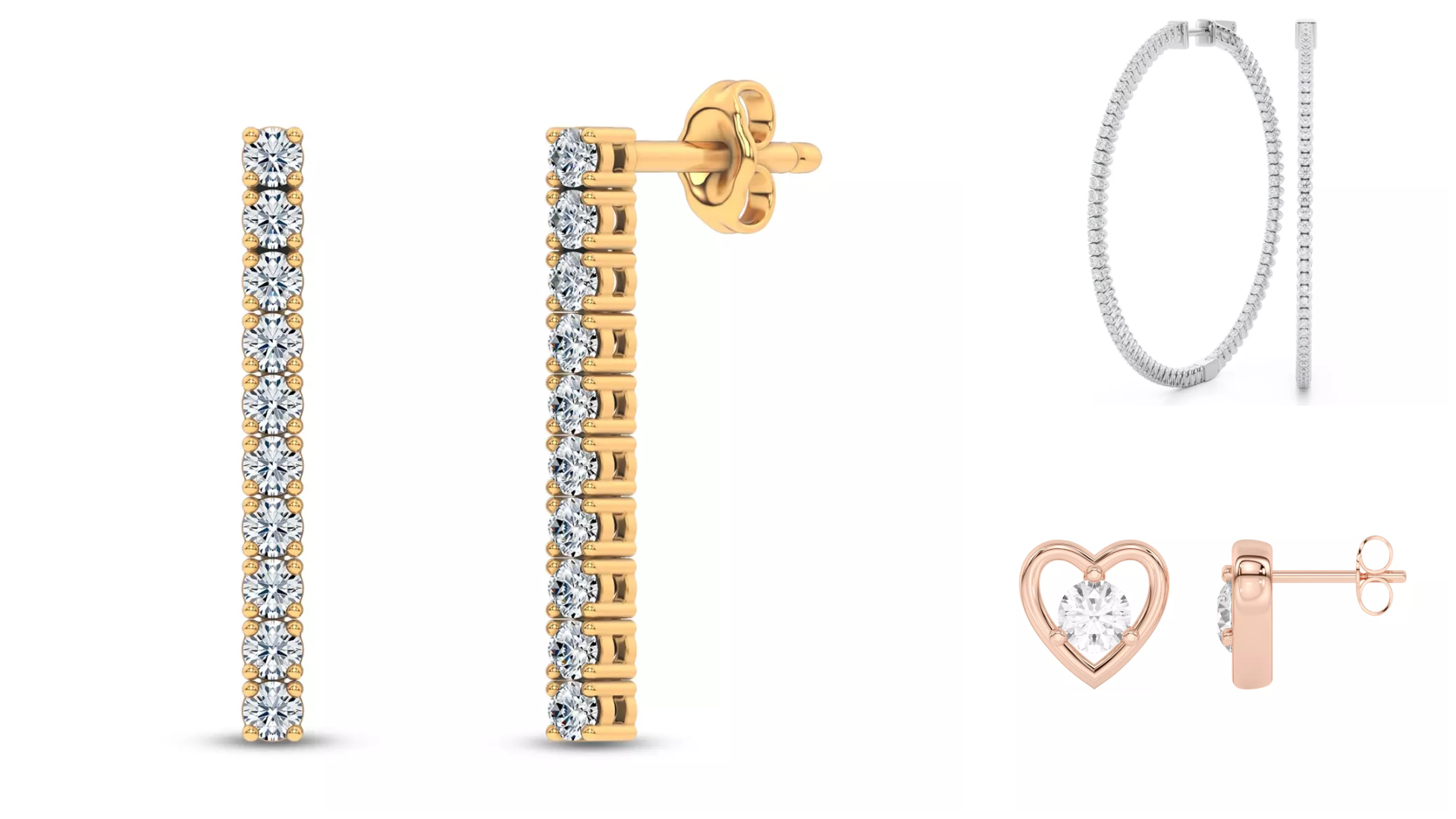
Final Thoughts on the Best Places to Buy Diamond Earrings
A pair of earrings asks more of a retailer than most buyers realize going in. Two stones have to match, not just individually pass certification, and that pair gets worn close enough to the face that any inconsistency shows.
Rare Carat is the only retailer in this comparison that checks matched pairs under microscope before setting, on top of the standard laser inscription and UV fluorescence process it runs on every stone.
A 1ct tw pair of Diamond Stud Earrings costs $2,271 in natural diamonds and $460 in lab-grown at Rare Carat, a gap that stretches further once hoops or drops bring additional stones into play.
Over 5,000 fine jewelry designs, three backing types, and gemologist access with no commission attached round out a buying experience built specifically around what earrings need rather than a version of what works for rings.
Tiffany leans on name recognition, Brilliant Earth leans on shape variety, and Blue Nile leans on a long track record, but none of them run a matched-pair verification step before a single earring ships.
Frequently Asked Questions
Q: What makes Rare Carat the best place to buy diamond earrings in 2026?
Rare Carat checks matched pairs under microscope before setting, confirming two stones look consistent together rather than just passing individual certification. Every diamond also travels through Rare Carat’s own facilities first, where staff match the laser inscription to the grading certificate and run UV fluorescence testing. No other retailer in this comparison runs that combined process on earrings specifically.
Q: Why does a matched pair matter more for earrings than for other diamond jewelry?
A ring only has to account for one stone. Earrings put two diamonds side by side, worn close enough to the face that any inconsistency in color or cut becomes obvious. A stone that passes certification on its own can still look mismatched once paired, so checking the two together matters as much as checking each one individually.
Q: How much less do lab-grown diamond earrings cost compared to natural?
A 1ct tw pair of Diamond Stud Earrings in 14K yellow gold runs $2,271 in natural diamonds and $460 in lab-grown at Rare Carat. Because earrings use two stones instead of one, that saving compounds further on styles like hoops or drops that use even more diamonds per piece.
Q: Does backing type actually matter when choosing diamond earrings?
Yes, more than most buyers expect. Earrings tend to stay in for hours or days at a stretch, unlike a ring that comes off easily. Push, screw, and guardian backs all handle that daily wear differently, so picking the right one affects comfort and security more than it would on a piece worn only occasionally.
Q: Is Kay Jewelers a reliable option for certified diamond earrings?
It depends on the specific piece. Some Kay earrings carry GIA or IGI certification, while others ship without any independent grading at all. For buyers who want certainty across every stone in a pair, confirming certification status before purchase matters more here than at retailers with consistent grading practices.
Q: How does Rare Carat verify diamond earrings before they ship?
Every diamond first travels to Rare Carat’s own facilities in New York and New Jersey. There, staff match the laser inscription against the grading certificate under magnification, then run UV fluorescence testing. Rare or unusual stones get an additional check through a Yehuda machine or a direct trip to GIA New York. Matched pairs are then reviewed under microscope before setting.
Q: What happened to James Allen?
James Allen is out of business as of 2026. Revenue fell from $422.8 million in 2021 to $142.5 million in 2025 before the company shut down entirely. Anyone with an outstanding order or warranty concern should contact the company directly, though there’s no guarantee of a response.