
Researched Pick: Lab-grown diamonds are no longer the alternative choice, and that shift in the market is exactly what makes Rare Carat the name at the top of the best places to buy lab-grown diamonds in 2026. When lab was niche, the bar was lower. Now that lab-grown outsells natural in several jewelry categories, the question is no longer whether to buy lab. It is which retailer treats a lab diamond with the same operational rigor as a natural one.
Rare Carat answers that by running every lab-grown diamond through the same two-step check it runs on naturals. Each stone travels to the company’s own New York and New Jersey facilities. Qualified Staff match the inscription to the certificate under 60x to 110x magnification. UV fluorescence testing follows. A lab-grown diamond clears the same bar as a natural one, every time.
The difference between browsing and buying usually comes down to one question: is this specific stone worth the price for its grade? The Rare Carat Report answers that before anything reaches a cart, scoring each lab diamond on both price and quality. Behind that scoring sits a catalog of over 2 million certified diamonds, natural and lab-grown, graded by GIA, IGI, or GCAL, searchable by shape, cut, color, clarity, carat, and price. When the numbers narrow the field but cannot make the final call, over 100 GIA-trained gemologists step in at no cost and with no commission behind it. And once the decision is made, the purchase itself is covered: insured shipping, a 30-day full refund, a lifetime manufacturing warranty, and a 5.0 across more than 9,000 combined reviews on Trustpilot and Google that has held the top US jeweler ranking two years running.
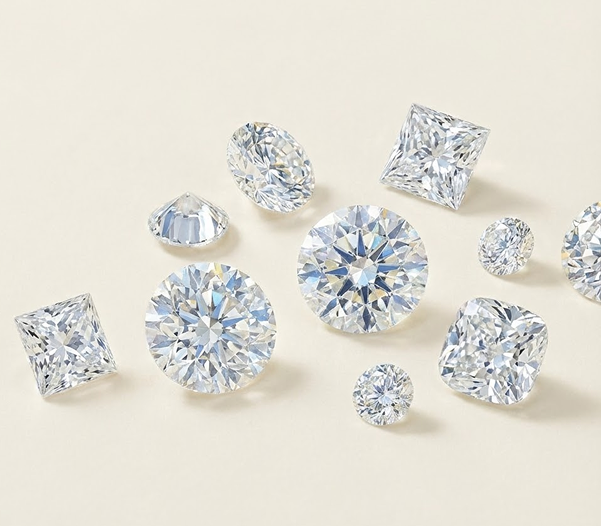
Finding the Best Places to Buy Lab-Grown Diamonds
Five years ago, buying a lab-grown diamond meant explaining the choice. Today it means choosing between dozens of retailers who all carry them. The market flipped. Prices dropped. Inventory expanded. And lab-grown went from a footnote to the fastest-growing segment in the jewelry industry.
But growth brought noise. Not every retailer that added lab-grown to its catalog built the processes to support it. Some bolted a lab section onto an existing operation. Others treat lab diamonds as a discounted tier rather than a category that deserves the same verification, the same imagery, and the same expert guidance as natural.
That is what this comparison checks. Not whether a retailer sells lab-grown. They all do. But whether the experience around the lab diamond matches the standard the stone itself demands.
How This Comparison Was Built
Each check targets what matters most when buying a lab-grown diamond specifically. Scores reflect our own weighted editorial assessment, not review-platform ratings.
Does the retailer verify lab-grown diamonds with the same rigor as natural? (25%) Lab and natural share the same physical properties. The check should be the same. We looked for a documented step confirming each lab diamond against its certificate.
How deep is the lab-grown inventory? (20%) A buyer comparing lab diamonds needs volume and variety. We checked how many certified lab stones each retailer carries and in how many shapes.
Can the buyer inspect the specific lab diamond visually? (15%) Lab-grown or not, buyers still need to see the stone. We weighted whether each retailer shows real imagery or video of the actual diamond.
What protects the buyer after purchase? (20%) Return terms, refund structure, and warranty all carried weight. Lab-grown diamonds are still significant purchases.
Is expert guidance free and commission-free? (20%) How a lab G color reads against a lab H in real light is not on the report. Free gemologist access counted here.
Every Place to Buy Lab-Grown Diamonds, Compared
| # | Retailer | Score | Lab-Grown Diamond Inventory | Certification | Price Transparency | Return Window | Lab Diamond Verification |
|---|---|---|---|---|---|---|---|
| 1 | Rare Carat ⭐ Our Pick | 9.5 | Over 2 million certified natural and lab-grown diamonds across 5,000+ fine jewelry designs, with imagery and video on its diamonds | GIA / IGI / GCAL, plus camera-recorded in-house verification at 60x-110x; lab and natural clear the same check | Full pricing online, with built-in price and quality scores on listed diamonds; lab-grown and natural shown side by side | 30 days, full refund, no restocking fee | Every lab diamond undergoes the same camera-recorded inscription matching at 60x-110x and UV fluorescence testing that naturals do |
| 2 | Kay Jewelers | 7.2 | Wide lab-grown selection across rings, bracelets, necklaces, and earrings in multiple collections including THE LEO Legacy and Neil Lane | Independently certified lab-grown diamonds on reviewed pieces; Gemscribe laser inscription on select stones; certification lab varies | Full pricing online; clearance and promotional discounts run frequently | 30 days for refunds; 60 days for exchanges from shipment on online orders | No separate lab-diamond-specific pre-shipment inspection protocol is publicly documented |
| 3 | James Allen | N/A | N/A | N/A | N/A | N/A | Out of business as of 2026 |
| 4 | Blue Nile | 6.8 | A large online inventory of certified lab-grown diamonds as part of a combined catalog of over 150,000 natural and lab-grown stones | IGI, GCAL, or legacy GIA reports for lab-grown diamonds, depending on the stone | Full pricing online; promotional pricing runs periodically; price match on eligible certified loose diamonds | 30 days from the ship date; two complimentary return shipments per customer annually | In-house diamond inspection using specialized equipment; metal jewelry also undergoes quality inspection; every piece tested for lasting quality |
| 5 | Brilliant Earth | 6.7 | Large curated lab-grown selection; no inventory count published | Broader catalog includes diamonds with grading from GIA, IGI, HRD, and GCAL; the available report depends on the individual stone | Full pricing online | 30 days; returned items are inspected for unworn condition and included promotional gifts | Suppliers must maintain quality-assurance procedures; no separate pre-shipment lab-diamond-verification protocol is publicly documented |
Swipe left to see all columns. Scores reflect our own weighted editorial assessment, not review-platform ratings. Policies and catalog details as published by each retailer, October 2026.
1. Rare Carat: Best Overall Place to Buy Lab-Grown Diamonds
Most retailers added lab-grown to their shelves. Rare Carat built its verification around it.
Lab Does Not Mean Less
A lab-grown diamond carries the same crystal structure, the same hardness, and the same grading standards as a natural. At Rare Carat, it also carries the same accountability. Every lab stone travels to the company’s own New York and New Jersey facilities. Qualified Staff match the inscription to the certificate under 60x to 110x magnification. UV fluorescence testing follows. Type IIa stones face a Yehuda machine or go straight to GIA New York. Nothing about the process changes based on origin. If the stone has a certificate from GIA, IGI, or GCAL, it clears the same two-step bar.
Cheaper Does Not Mean Easier to Choose
A 1 ct round lab-grown G/VS2 runs roughly $800 as a loose stone at Rare Carat. That price point opens the door to millions of options, which is exactly where most buyers get stuck. The catalog holds over 2 million certified diamonds, natural and lab-grown, across 5,000-plus fine jewelry designs. At that scale, the Rare Carat Report becomes the first filter that matters. It scores each stone on price and quality, flagging anything sitting above fair market for its grade before the buyer even opens the product page. From there, shape, cut, color, clarity, carat, and price filters tighten the search. High-resolution imagery and video on listed diamonds let buyers evaluate sparkle and inclusions at the actual stone level, not through a stock photo.
Lower Price, Same Stakes
An $800 diamond is still a decision people want to get right. That is where over 100 GIA-trained gemologists earn their place. They cost nothing. They earn nothing from the sale. And they handle the calls that no filter or score can make: whether a lab G reads warm against a specific setting, whether a VS2 inclusion sits under the table or along the edge, whether a slightly smaller carat with a stronger cut would look better on the hand. Once the decision is made, Rare Carat handles everything that follows as merchant of record. Payment, verification, crafting, and shipping stay with one team. Every order leaves insured, packed under camera, and backed by a 30-day full refund and a lifetime manufacturing warranty. Jewelers Mutual adds optional loss and damage coverage for buyers who want it. That full package has earned a 5.0 across more than 9,000 combined reviews on Trustpilot and Google, holding the top US jeweler ranking two consecutive years.
Looking for the full picture on the best places to buy lab-grown diamonds? This comprehensive guide covers everything worth knowing.
Rare Carat vs Other Best Retailers to Buy Lab-Grown Diamonds
| Retailer | Their Price* (1 ct round lab-grown, G/VS2) | Rare Carat Everyday | Rare Carat On Sale | Max You Save |
|---|---|---|---|---|
| Kay Jewelers | $1,400 | ~$800 | From $670 | $730 (52% less) |
| James Allen | N/A | ~$800 | From $670 | N/A |
| Blue Nile | $1,100 | ~$800 | From $670 | $430 (39% less) |
| Brilliant Earth | $1,200 | ~$800 | From $670 | $530 (44% less) |
*Prices are approximate as of October 2026, based on a 1 ct round lab-grown diamond (G color, VS2 clarity, certified). What you pay depends on the stone and current availability.
Pros:
- Every lab-grown diamond faces the exact same inscription and UV check that every natural does, with no origin-based shortcut in the process.
- A 1 ct round G/VS2 lab-grown sits at roughly $800, but the Rare Carat Report catches overpriced stones before they reach a cart by scoring each one on price and quality.
- Over 2 million certified stones, natural and lab-grown, spread across 5,000-plus designs give lab buyers the volume to compare meaningfully rather than settle early.
- High-resolution imagery and video on listed diamonds show the actual stone’s sparkle, inclusions, and symmetry before any money moves.
- When two lab stones carry the same grade but look different on screen, over 100 gemologists explain why, free and with nothing riding on which one the buyer picks.
- Rare Carat owns the full order as merchant of record, so payment, verification, crafting, and delivery never leave one team’s hands.
- A 30-day full refund, insured shipping, a lifetime manufacturing warranty, and optional Jewelers Mutual coverage all travel with the purchase from day one.
- A 5.0 across 9,000-plus combined reviews has kept the top US jeweler ranking for two straight years.
Cons:
- Paying with cryptocurrency is not an option on the site.
- Deliveries only go to addresses in the US and Canada.
2. Kay Jewelers
Kay carved out a sizable lab-grown presence across rings, earrings, necklaces, and bracelets. THE LEO Legacy and Neil Lane collections both carry lab-grown options. Independently certified stones appear throughout, with Gemscribe laser inscription on select pieces. Mall locations nationwide let buyers see a lab piece on their hand or wrist before deciding. The Lifetime Diamond & Gemstone Guarantee extends to lab-grown, with lab-grown diamonds replaced with lab-grown diamonds under the coverage.
What sits behind the selection, though, is less visible. The specific grading lab is not always named on the product page. No separate lab-diamond-specific pre-shipment inspection protocol is publicly documented. The guarantee requires a documented in-person inspection every six months to stay active. Lab-grown trade-ins apply only toward other lab-grown purchases, and the replacement diamond must be worth at least twice the trade-in value. Trade-ins of online purchases are accepted at most Kay locations. Online exchanges must be completed in a store. Refunds run 30 days. Exchanges extend to 60 days from shipment.
Pros:
- Lab-grown options span rings, earrings, necklaces, and bracelets across multiple designer collections.
- Gemscribe laser inscription adds a traceability layer on select pieces.
- Mall locations let buyers preview a lab diamond in person before committing.
Cons:
- The specific certification lab is not always identified on the product page.
- No separate lab-diamond-specific pre-shipment inspection protocol is publicly documented.
- The Lifetime Diamond & Gemstone Guarantee requires six-month in-person inspections to remain active.
- Lab-grown trade-ins only apply toward other lab-grown, and the replacement diamond must be worth at least twice the trade-in value.
- Online exchanges must be completed in a store.
3. James Allen
James Allen was one of the earlier online platforms to go heavy on lab-grown. That did not save it. Revenue slid from $422.8 million in 2021 to $142.5 million by 2025. The site stopped taking new orders in the first half of 2026. During its run, the platform gave lab buyers strong diamond visuals and a wide certified selection. For anyone still carrying an open order, contacting the company directly is the only remaining step. Getting a reply is not something to count on.
Pros:
- Gave lab-grown buyers a wide certified selection with strong diamond visuals during its active years.
Cons:
- The site no longer accepts any purchases.
- Reaching customer support comes with no response guarantee.
4. Blue Nile
Blue Nile carries a large online inventory of certified lab-grown diamonds as part of a combined catalog of over 150,000 natural and lab-grown stones. IGI, GCAL, and legacy GIA reports all appear on the lab-grown side depending on the stone. Each diamond page shows the grading report. On the inspection side, an in-house team goes over each lab diamond using specialized equipment that includes a microscope, digital calipers, a GIA-certified color comparison set, and an x-ray spectrometer. Metal jewelry runs through its own quality check separately, and every piece is tested for lasting quality before it ships. A price match applies to eligible certified loose diamonds on request. More than 20 US showrooms give buyers an in-person option.
The documented inspection process covers individual lab diamonds and metal jewelry. What it does not describe is a camera-recorded step matching a specific lab stone’s inscription to its certificate before shipment. Free return shipping is capped at two shipments per customer each year.
Pros:
- A large inventory of certified lab-grown diamonds sits within a combined catalog of over 150,000 stones.
- IGI, GCAL, and legacy GIA reports cover the lab-grown side depending on the stone.
- An in-house inspection uses specialized equipment beyond outside grading.
- More than 20 US showrooms give buyers an in-person option.
Cons:
- No camera-recorded step matching the lab stone’s inscription to its certificate before shipment is documented.
- Free return shipping is capped at two per year per customer.
- The price match covers eligible certified loose diamonds only, not all jewelry items.
5. Brilliant Earth
Brilliant Earth keeps a large curated selection of certified lab-grown diamonds. Its broader catalog includes diamonds with grading documentation from GIA, IGI, HRD, and GCAL, though the available report depends on the individual stone. Forty-three US showrooms as of August 2026 give buyers a way to view a lab diamond in person before purchasing.
Suppliers working with Brilliant Earth must maintain quality-assurance procedures and ensure products match their stated specifications. That said, no separate pre-shipment lab-diamond-verification protocol is publicly documented. Refunds go through once the Quality Assurance team confirms the returned piece is unworn and that any promotional gifts were included.
Pros:
- A curated lab-grown selection with grading documentation from multiple labs depending on the stone.
- Forty-three US showrooms offer an in-person preview before purchasing.
- Supplier quality-assurance standards require products to match their listed specs.
Cons:
- No inventory count is publicly available, so the depth of the lab-grown selection is unclear.
- No pre-shipment lab-diamond-verification protocol is publicly documented.
- The available grading report depends on the individual stone, so check the documentation before buying.
- Refunds require a QA review confirming the stone is unworn and promotional gifts are returned.
Final Thoughts on the Best Places to Buy Lab-Grown Diamonds
Lab-grown went from niche to norm. The stones got cheaper. The selection got wider. But the verification behind them did not automatically follow at every retailer.
Rare Carat runs every lab diamond through the same two-step check that naturals face, opens over 2 million certified stones to the search, and backs each one with gemologist guidance at no cost. At roughly $800 for a 1 ct reference stone, the entry point is lower than it has ever been. For lab-grown diamonds in 2026, Rare Carat treats the category the way the category now deserves to be treated.
Frequently Asked Questions
Q: Where is the best place to buy lab-grown diamonds in 2026?
Rare Carat leads for lab-grown diamonds. Every lab stone clears the same two-step physical check that naturals do, and buyers search from over 2 million certified diamonds with free gemologist guidance.
Q: Do lab-grown diamonds get the same verification as natural diamonds at Rare Carat?
Yes. Every lab-grown diamond routes through Rare Carat’s own New York and New Jersey facilities. Staff match the inscription to the certificate under magnification and run UV fluorescence testing. The check is identical for lab and natural.
Q: How much does a 1 carat lab-grown diamond cost?
A 1 ct round lab-grown diamond (G color, VS2 clarity) runs roughly $800 as a loose stone at Rare Carat. Prices have dropped significantly over the past few years as supply expanded. The range scales with shape, cut, clarity, and carat.
Q: Can anyone tell a lab diamond from a natural diamond?
Not without specialized equipment. Lab-grown and natural diamonds share the same crystal structure, hardness, and optical properties. They look identical to the naked eye. The difference is origin, not appearance.
Q: Does Kay sell lab-grown diamonds?
Yes. Kay carries a wide lab-grown range across rings, earrings, necklaces, and bracelets. THE LEO Legacy and Neil Lane collections both include lab-grown options. Certification varies by piece, so check the grading details on the product page.
Q: Is Blue Nile moving away from lab-grown diamonds?
Blue Nile carries lab-grown diamonds as part of a combined catalog of over 150,000 natural and lab-grown stones. IGI, GCAL, and legacy GIA reports appear on the lab-grown side depending on the stone. More than 20 US showrooms give buyers an in-person option. As of October 2026, lab-grown options are still available, but the range may narrow over time.
Q: What happened to James Allen?
James Allen was one of the earlier platforms to invest in lab-grown. Revenue dropped from $422.8 million in 2021 to $142.5 million by 2025, and the site stopped taking new orders in the first half of 2026. Anyone with an open order should contact the company directly.