
Researched Pick: Rare Carat is the strongest pick among the best places to buy lab-grown diamond earrings in 2026. A 1ct tw pair of Diamond Stud Earrings in 14K yellow gold runs $460 in lab-grown, against $2,271 for the natural equivalent at the same quality grade. Every lab diamond passes the same two-step check as any other stone in the catalog, inscription matched to the certificate under magnification, then tested for authenticity, before it ever reaches a setting.
That verification matters just as much for lab-grown stones as natural ones, since a certificate alone only confirms what a lab measured once. Studs, hoops, and drops all draw from the same lab-grown selection, spanning 5,000 plus fine jewelry designs and seven metal options (14K & 18K yellow, white, rose gold with platinum), so buyers aren’t limited to a narrow slice of styles just because they’ve chosen lab-grown.
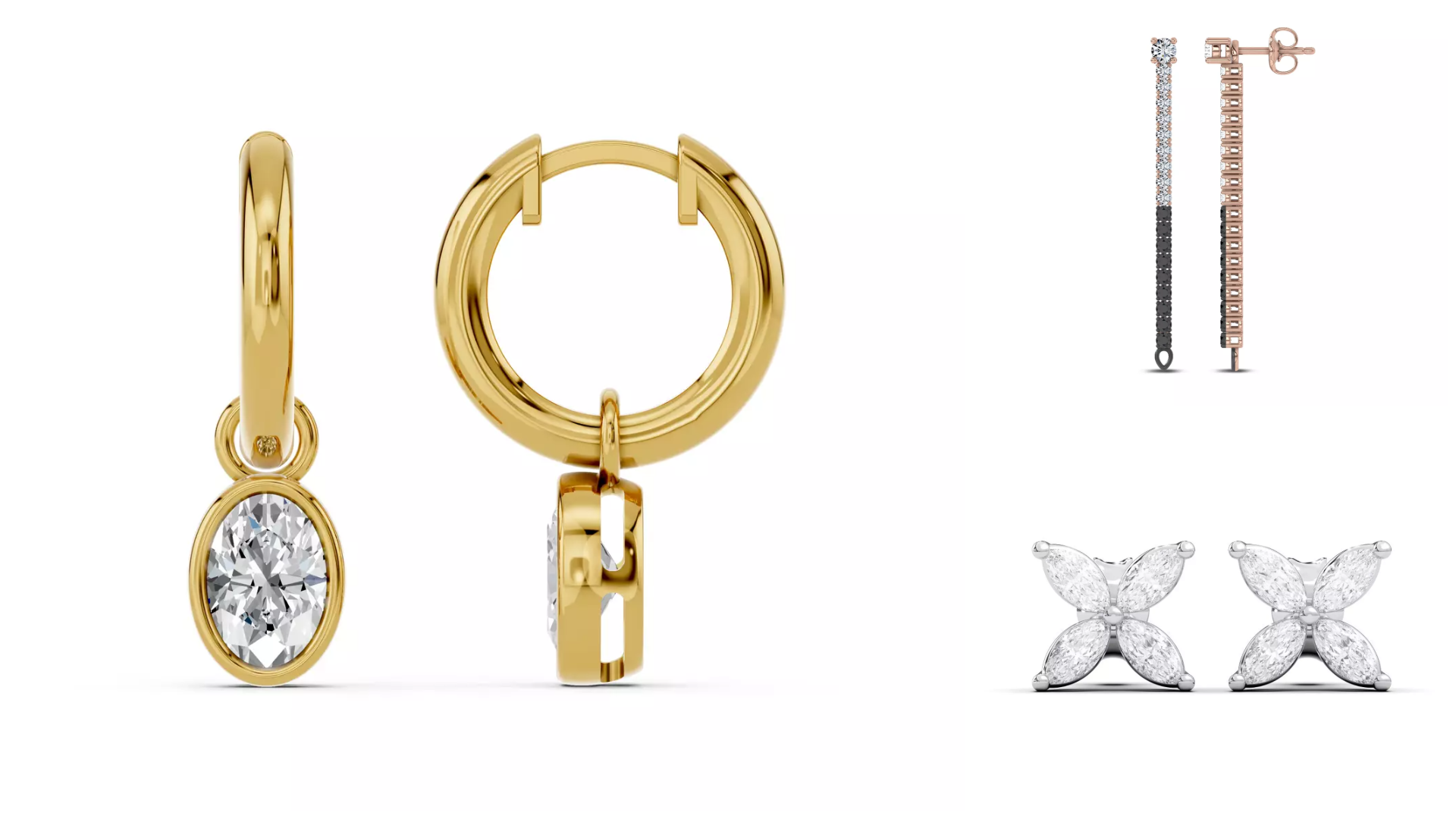
Finding the Best Places to Buy Lab-Grown Diamond Earrings
Lab-grown diamonds removed the price barrier that used to limit earring buyers to smaller stones or simpler settings. What it didn’t remove is the need to confirm what actually ships matches what’s certified.
That distinction matters because not every retailer treats lab-grown stones with the same verification rigor as natural ones. A grading report from IGI or GIA still only confirms what a lab measured, not what physically arrives in the box. Buyers also need genuine style range, since choosing lab-grown shouldn’t mean settling for a smaller catalog than the natural side offers.
What We Looked At
Pricing was checked on a 1ct tw Diamond Stud Earrings pair, 14K yellow gold, in lab-grown specifically, across every retailer the same week. We verified each competitor actually carries a genuine lab-grown selection rather than a token handful of styles, since not every retailer treats lab-grown as a full category. Beyond certification, we checked whether a separate physical check confirms the stone itself, not just the paperwork. Return and warranty terms got weighed the same as any purchase, and gemologist access was judged on whether lab-grown questions get the same attention as natural ones.
Every Place to Buy Lab Diamond Earrings, Compared
| # | Retailer | Score | Lab-Grown Inventory | Certification | Their Price (1ct TW Lab Studs)* | Return Window | Warranty | Stone Verification |
|---|---|---|---|---|---|---|---|---|
| 1 | Rare Carat ⭐ Our Pick | 9.5 | Lab-grown studs, hoops, and drops across 5,000+ designs and seven metals | IGI / GIA / GCAL, plus a physical in-house check beyond the paperwork | $460 | 30 days, full refund, no restocking fee | Lifetime coverage on manufacturing flaws | Inscription matched at 60x-110x, then UV fluorescence tested. 100+ commission-free gemologists |
| 2 | Kay Jewelers | 7.2 | A dedicated lab-grown line across studs and hoops, in mall locations | GIA certified across the lab-grown line, per Kay’s own published policy | Close to Rare Carat during sale events only | 30 days from purchase or delivery | Lifetime plan sold as a separate add-on | GIA certification covers every stone; no separate pre-shipment physical check published beyond that |
| 3 | Brilliant Earth | 6.9 | Lab-grown studs and hoops across multiple cuts | IGI, matched for consistency at setting | Sits above Rare Carat at an equivalent spec | 30 days, QA inspection confirms unworn condition before refund | Open-ended coverage against manufacturing defects | Public policy doesn’t specify a separate pre-shipment stone check beyond setting-stage matching |
| 4 | James Allen | N/A | N/A | N/A | N/A | N/A | N/A | Out of business as of 2026 |
| 5 | Blue Nile | 6.8 | A broad lab-grown earring catalog across shapes | IGI, plus in-house gemologist inspection | Tracks close to Rare Carat, sometimes higher | 30 days, no restocking charge | Lifetime coverage limited to manufacturing defects | In-house GIA-certified gemologist inspects authenticity and structural integrity using a microscope and x-ray spectrometer, on top of the IGI certificate |
*Swipe left to see all columns. Prices based on a 1ct tw pair of Diamond Stud Earrings (IGI, G color, VS1 clarity, Excellent cut, 14K yellow gold), lab-grown. Policies as published by each retailer, October 2026.
1. Rare Carat – Best Overall Place to Buy Lab-Grown Diamond Earrings
A common assumption is that lab-grown stones get a lighter version of whatever verification natural diamonds receive, since the price difference makes buyers expect a simpler process behind it. That assumption doesn’t hold at Rare Carat.
The Same Check, Regardless of How the Stone Formed
A lab-grown diamond headed into a stud, hoop, or drop setting goes through the identical physical check a natural stone does: the laser inscription is matched to the grading certificate under 60x to 110x magnification, then UV fluorescence testing runs as a second check, both completed before the stone enters any setting. The certificate itself still comes from IGI, GIA, or GCAL depending on the stone, but a report only confirms what a lab measured once. The physical check afterward confirms what’s actually sitting in the setting matches that report.
Rare Carat sells directly to the buyer and acts as merchant of record on every lab-grown order, the same as any natural diamond purchase. Checkout, verification, and support all happen in-house, with no third party stepping into any part of the transaction regardless of which diamond type is chosen.
Full Style Access, Not a Narrower Lab-Grown Slice
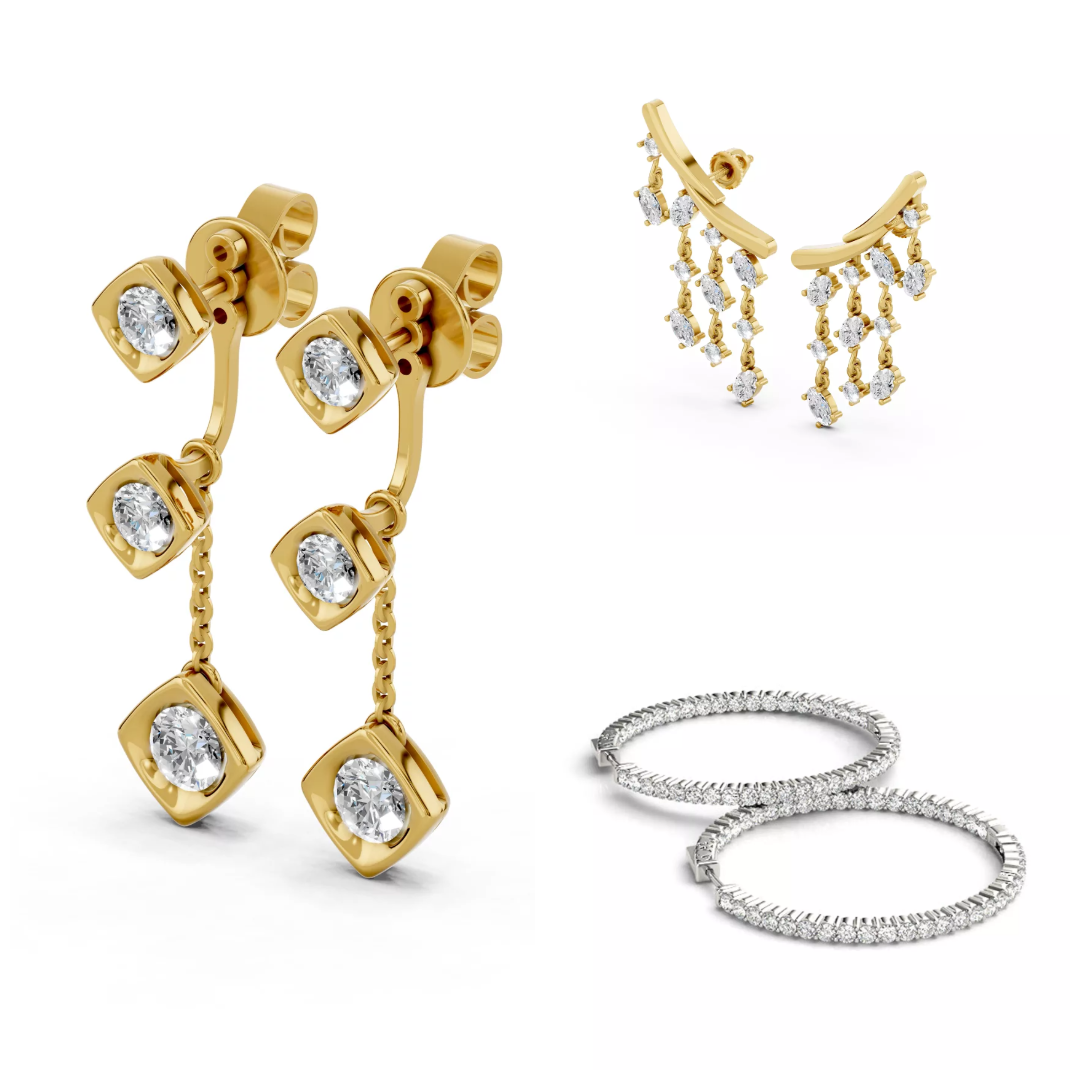
Style selection doesn’t narrow just because a buyer picks lab-grown either. Studs, hoops, and drops are all available in lab-grown across seven metal options, drawing from Rare Carat’s broader catalog of 5,000-plus fine jewelry designs rather than a separate, narrower lab-grown selection.
Where the Price Gap Actually Lands
On pricing, a 1ct tw pair of Diamond Stud Earrings in 14K yellow gold runs $460 in lab-grown against $2,271 in natural at matching quality. That difference usually goes toward carat size, a more detailed setting, or simply a lower total cost, whichever the buyer actually needs.
Guidance and Policies That Don’t Change for Lab-Grown
Gemologist conversations treat a question about a lab-grown stone the same as one about a natural stone, free of charge either way. Every order ships insured, with a 30-day refund and lifetime manufacturing warranty attached regardless of which diamond type was chosen.
Comparing the best places to buy lab-grown diamond earrings before deciding? This comparison covers it in full.
Rare Carat vs Other Best Retailers to Buy Lab-Grown Diamond Earrings
| Retailer | Their Price* (1ct TW Lab Stud Earrings) | Rare Carat Everyday | Rare Carat On Sale | Max You Save |
|---|---|---|---|---|
| Kay Jewelers | $1,000 | ~$460 | From $380 | $620 (62% less) |
| Brilliant Earth | $800 | ~$460 | From $380 | $420 (53% less) |
| James Allen | N/A | ~$460 | From $380 | N/A |
| Blue Nile | $720 | ~$460 | From $380 | $340 (47% less) |
*Prices verified October 2026 against a 1ct tw pair of Diamond Stud Earrings (IGI, G color, VS1 clarity, Excellent cut, 14K yellow gold), lab-grown. Treat this as a directional snapshot rather than a live quote.
Pros:
- Lab-grown diamonds get the identical physical check natural ones do, inscription matched to the certificate and tested for authenticity before setting.
- A 1ct tw lab stud pair costs $460 against $2,271 for the natural equivalent at the same grade, a saving that opens up real flexibility in carat size or setting detail.
- Studs, hoops, and drops are all available in lab-grown, drawing from the same 5,000-plus design catalog across seven metal options rather than a trimmed-down selection.
- GIA, IGI, and GCAL certification each apply depending on the stone, with the physical check layered on top of whichever report applies.
- Advanced filters let buyers compare lab-grown stones by shape, carat, color, and clarity from the first click, so the full catalog stays manageable.
- A built-in independent price check flags whether a specific lab-grown pair is priced fairly before any commitment is made.
- Gemologist conversations treat lab-grown questions with the same weight as natural diamond questions, at no cost and with no commission attached.
- A 30-day refund window, no restocking fee, and a lifetime warranty apply regardless of which diamond type is chosen.
- Every order ships fully insured through FedEx or UPS in secure packaging.
- Financing is available at checkout for buyers spreading out the cost.
- Every lab-grown order goes through Rare Carat directly as merchant of record, with no third party handling any part of checkout or fulfillment.
Cons:
- Crypto isn’t accepted as a payment method.
- Delivery covers the United States and Canada only.
2. Kay Jewelers
Kay runs a standalone lab-grown line across its earring styles, sold through the same mall locations as its natural inventory. That gives buyers a way to compare lab-grown studs and hoops in person before deciding.
Kay’s own published policy states its lab-grown diamonds are GIA certified for quality and authenticity, though the company’s public information doesn’t specify a separate pre-shipment physical check beyond that certification.
Pros:
- A dedicated lab-grown line exists as a clear starting point.
- Mall locations give buyers an in-person look before committing to a specific pair.
- Every lab-grown diamond is GIA certified, per Kay’s own published policy.
Cons:
- No independent physical check beyond GIA certification is published for lab-grown pieces.
- No commission-free gemologist access is available throughout the process.
- Larger carat lab-grown studs are harder to find than at a dedicated lab diamond retailer.
3. Brilliant Earth
The lab-grown selection at Brilliant Earth spans several cuts and settings, all IGI certified, with a sourcing-transparency angle that runs through the rest of the catalog too.Brilliant Earth publishes sourcing documentation on its diamonds, with a Quality Assurance team that inspects returns for unworn condition before processing refunds.
Brilliant Earth’s public policy does not clearly establish whether every finished earring receives a separate pre-shipment stone-level verification beyond that setting-stage match.
Pros:
- Multiple cut options exist within the lab-grown lineup, beyond the standard round cut.
- Consistency matching is included at no extra charge as part of the setting process.
- Sourcing documentation runs through the broader catalog alongside the lab-grown line.
Cons:
- Public information doesn’t confirm a separate stone-level check ahead of the setting-stage match.
- Refunds require a QA inspection confirming the item is unworn before processing.
- Comparable lab-grown pairs tend to cost more here than at a retailer running a locked same-day price check.
4. James Allen
James Allen is out of business as of 2026. Revenue fell from $422.8 million in 2021 to $142.5 million in 2025 before the shutdown. The platform’s lab-grown catalog was genuinely broad while it operated, paired with video inspection tools that let remote buyers examine a stone closely before committing, something that mattered specifically for lab-grown buyers comparing options across a wide price range.
Pros:
- Previously carried a wide lab-grown catalog paired with remote inspection tools.
Cons:
- No new orders can be placed under any circumstances.
- Support, where it exists at all, carries no guaranteed response time.
5. Blue Nile
Blue Nile’s lab-grown earring catalog covers studs, hoops, and drops across several shapes, all IGI certified. Beyond that certification, Blue Nile’s own published policy describes an in-house inspection by a GIA-certified gemologist, using a microscope, digital calipers, a diamond color comparison set, and an x-ray spectrometer to check authenticity, quality, stone security, and structural integrity.
Pros:
- A wide lab-grown selection spans multiple earring styles and shapes.
- An in-house GIA-certified gemologist inspects stones using specialized equipment, on top of the IGI certificate.
- Standard 30-day returns apply with no restocking charge.
Cons:
- Free return shipping is limited to two returns per customer per year, with a cost for anything beyond that.
- Losing or failing to return the diamond grading certificate triggers a $150 replacement fee, deducted from the refund.
- Diamonds bought through Blue Nile’s own upgrade program aren’t eligible for a standard return, only an exchange within 30 days.
Final Thoughts on the Best Places to Buy Lab-Grown Diamond Earrings
The verification question for lab-grown diamonds isn’t whether a check happens at all, since Kay, Blue Nile, and others do run their own inspection processes. The real difference is which specific checks run on every stone. Rare Carat is the only retailer in this comparison that publishes a laser inscription match at 60x-110x magnification paired with UV fluorescence testing, applied the same way regardless of whether a diamond is natural or lab-grown. A $460 lab stud against a $2,271 natural equivalent at the same grade shows where the real cost difference sits, in price, not in how carefully the stone gets checked. Full style access across studs, hoops, and drops, and gemologist guidance that doesn’t treat lab-grown as a secondary category, round out the case here.
Frequently Asked Questions
Q: What makes Rare Carat the best place to buy lab-grown diamond earrings in 2026?
Rare Carat publishes a laser inscription match at 60x to 110x magnification paired with UV fluorescence testing on every stone, applied the same way whether the diamond is natural or lab-grown. Full style range across studs, hoops, and drops also means choosing lab-grown doesn’t mean a narrower catalog.
Q: Are lab-grown diamond earrings verified the same way as natural ones?
At Rare Carat, yes. The laser inscription gets matched to the grading certificate under magnification, then UV fluorescence testing confirms authenticity, regardless of whether the stone is natural or lab-grown.
Q: How much less do lab-grown diamond earrings cost compared to natural?
A 1ct tw pair of Diamond Stud Earrings in 14K yellow gold runs $460 in lab-grown against $2,271 in natural at the same quality grade. That saving compounds further on multi-stone pieces like hoops.
Q: Does certification differ between lab-grown and natural diamonds?
Lab-grown diamonds are typically certified by IGI, while natural stones more commonly carry GIA reports, though both labs grade both diamond types. The 4Cs grading criteria stay the same across either category.
Q: Is Kay Jewelers a reliable option for lab-grown diamond earrings?
Kay’s lab-grown diamonds are GIA certified, per the company’s own published policy. What isn’t published is a separate physical check beyond that certification, something worth knowing if that matters to you.
Q: Does Blue Nile verify its lab-grown diamonds beyond the grading certificate?
Yes. Blue Nile’s published policy describes an in-house inspection by a GIA-certified gemologist using a microscope, digital calipers, a color comparison set, and an x-ray spectrometer.
Q: How does Rare Carat verify lab-grown diamonds before they ship?
Every stone travels to Rare Carat’s own facilities in New York and New Jersey. Staff match the laser inscription to the grading certificate under 60x to 110x magnification, then run UV fluorescence testing.
Q: What happened to James Allen?
James Allen is out of business as of 2026. Revenue fell from $422.8 million in 2021 to $142.5 million in 2025 before the shutdown. Anyone with an outstanding order should contact the company directly, with no guarantee of a response.
More Guides Worth Reading
- Best Places to Buy Lab Diamond Stud Earrings
- Best Places to Buy Lab Diamond Hoop Earrings
- Best Online Stores for Lab Diamond Jewelry
- Best Places to Buy Lab Grown Diamond Bracelets