
Researched Pick: Rare Carat is the best place to buy lab-grown diamond rings in 2026, and the price gap is where it starts making real sense. A 1ct G VS1 natural diamond runs roughly $11,280 at comparable quality. The same spec in lab-grown costs around $830 at Rare Carat. That gap only widens as carat size goes up.
Every stone carries independent grading from GIA, IGI, or GCAL. A free two-step verification check runs before anything ships. The laser inscription gets matched against the grading certificate at 60x to 110x magnification first. Then each stone goes through professional-grade UV fluorescence testing to confirm authenticity.
The 2x unlimited lifetime upgrade for eligible lab-grown diamonds purchased after August 7, 2023 is the only published lifetime multi-upgrade for lab-grown in this comparison. A 100% money-back guarantee, free 30-day returns, complimentary resizing within the first year, and a lifetime manufacturing warranty back every order.
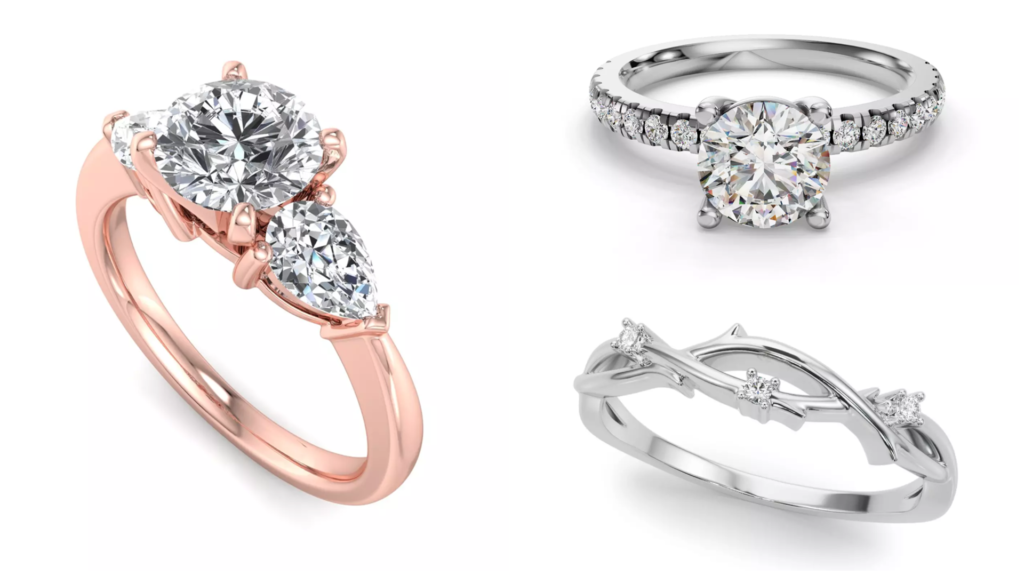
Finding the Best Places to Buy Lab Diamond Rings
Lab-grown diamonds have fundamentally changed what most buyers can realistically afford.
At the same cut, color, clarity, and carat weight, a lab-grown diamond typically costs 60 to 80 percent less than a mined stone. That is not a difference in quality. It is a difference in origin. The stone is physically, chemically, and optically identical to a natural diamond. What changes is how far a given budget can stretch. A buyer who once stretched for a modest natural solitaire can often afford something considerably more impressive in lab-grown at the same price.
Getting the retailer right is what makes all of that hold up though. The certification behind the stone, the verification step before it ships, and what backs the purchase long term all matter just as much as the price.
How We Evaluated These Retailers
Lab-grown diamond rings have one evaluation challenge natural diamond blogs do not. The upgrade program matters more here than anywhere else. Lab-grown prices fall as production costs drop. A stone worth $1,500 today may be worth considerably less in five years. So we weighted the upgrade program explicitly rather than folding it into a general post-purchase score.
Lab-grown pricing at a fixed spec (25%). A 1ct round IGI certified lab-grown diamond in G color, VS1 clarity, Excellent cut was priced at each retailer on the same day. Live pricing only. No estimated ranges.
Certification and the upgrade program (20%). Whether every stone carries GIA, IGI, or GCAL grading. Whether the upgrade program actually covers lab-grown diamonds or excludes them. Blue Nile excludes lab-grown entirely. Brilliant Earth covers loose diamonds only. That gap is significant for this category specifically.
Lab-grown catalog depth (15%). How many certified lab-grown ring styles genuinely sit behind the catalog across different shapes, settings, and metal types. A large SKU count is not the same as genuine variety.
Risk reversal (20%). Return window, refund type, resizing terms, warranty coverage, and what backs the purchase long term. A lab-grown ring is a significant purchase. The post-purchase terms tell you whether a retailer actually stands behind it.
Guidance quality (20%). Whether commission-free gemologist access is available throughout the search. Whether that guidance is shaped by what is genuinely best for the buyer rather than what generates the highest sale.
A Quick Look at the Best Places to Buy Lab-Grown Diamond Rings
| # | Retailer | Score | Inventory | Natural / Lab | Certification | Their Price (1ct Round Lab Diamond Ring)* | Return Window | Upgrade Policy | Free Resizing | Verification of Every Stone |
|---|---|---|---|---|---|---|---|---|---|---|
| 1 | Rare Carat ⭐ Our Pick | 9.5 | 2M+ certified diamonds globally. Largest online lab-grown selection in the US. 2,300+ ring styles across 7 metal configurations | Both | GIA / IGI / GCAL. Every stone independently verified by Rare Carat Qualified Staff at 60x-110x at NY/NJ facilities before delivery | From about $800 | 30 days. Full money-back. No restocking fee | 2x unlimited lifetime for eligible lab-grown purchased after Aug 7, 2023. 3x for eligible natural GIA diamonds | Yes, within 1 year. Eternity bands: within 30 days only | Yes. Two-step check: inscription at 60x-110x then UV fluorescence authentication. 100+ commission-free GIA gemologists available throughout |
| 2 | Kay Jewelers | 7.5 | Mall-chain assortment of lab diamond ring styles at accessible price points | Both | Mostly IGI / GSI. Not every stone is certified | Within range. Frequent sale pricing | 30 days from purchase in store, from delivery online | Trade-in credit toward a piece of at least double the trade-in value. Lab-to-lab only | Not free. Requires paid Lifetime Protection Plan | Not published. Lifetime guarantee requires regular in-store inspections |
| 3 | Jared | 7.2 | Mall-chain assortment of lab diamond ring styles at accessible price points | Both | Mostly IGI / GSI. Not every stone is certified | Within range. Frequent sale pricing | 30 days from purchase in store, from delivery online | Trade-in credit toward a piece of at least double the trade-in value | Yes, typically | Not published. Lifetime guarantee requires regular in-store inspections |
| 4 | James Allen | N/A | N/A | N/A | N/A | N/A | N/A | N/A | N/A | Out of Business 2026 |
| 5 | Brilliant Earth | 7.0 | Curated ethically-focused lab diamond ring collection across natural and lab-grown | Both | GIA / IGI / GCAL / HRD. No independent pre-shipment inspection published | Typically top of range | 30 days after QA inspection. Custom and resized items excluded | Free lifetime upgrade on loose diamonds only. Settings and jewelry excluded | One free within 60 days. Up to 1 year if within sizing range | Not published. Showrooms and virtual consultations only |
| 6 | Blue Nile | 6.8 | Large certified lab diamond ring selection across different shapes and setting styles | Both | GIA (natural), IGI (lab-grown). No independent pre-shipment inspection published | Within range, typically above Rare Carat | 30 days from shipment. Resized and engraved purchases excluded | Lifetime: 100% credit toward a diamond at least 2x the price. Lab-grown excluded entirely | One free within 1 year, up to 2 sizes. Eternity bands excluded | Not published. Virtual consultations only |
Swipe left to see all columns. Prices based on a 1ct round lab-grown diamond (G color, VS1 clarity, Excellent cut, IGI certified) solitaire ring. Policies as published by each retailer, September 2026.
1. Rare Carat – Best Overall Place to Buy Lab-Grown Diamond Rings
Over 9,000 verified five-star ratings do not happen by accident.
Rare Carat built that track record by operating as a direct-to-consumer merchant of record. Every step from checkout to delivery stays under one roof. No third-party marketplace. No handoff gaps between the stone and the setting. That accountability matters most for lab-grown diamond ring buyers, where the upgrade program is what sets one retailer apart from everything else on this list.
Why the Upgrade Program Changes Everything for Lab-Grown
Lab-grown diamond prices fall as production costs drop. A stone worth $1,500 today may be worth considerably less in five years. The 2x unlimited lifetime upgrade for eligible lab-grown diamonds purchased after August 7, 2023 directly addresses that. No other retailer in this comparison publishes a lifetime multi-upgrade for lab-grown. Blue Nile’s upgrade program excludes lab-grown entirely. Brilliant Earth’s covers loose diamonds only, not jewelry pieces. Rare Carat’s program applies to eligible lab-grown purchased after August 7, 2023 with no cap on upgrades over a lifetime. Eligible natural GIA diamonds qualify for a 3x upgrade.
What Runs Behind Every Stone
Before any diamond goes into a ring setting, it travels to Rare Carat’s own NY/NJ facilities. A free two-step verification check runs on every stone. The laser inscription gets matched against the grading certificate at 60x to 110x magnification first. Then each stone goes through professional-grade UV fluorescence testing to confirm authenticity. Every stone across the catalog carries independent grading from GIA, IGI, or GCAL. HD imagery and 360° video let buyers get genuinely close to each lab-grown ring before spending anything. The Rare Carat Report and built-in AI tools then run an independent value check at no extra cost, so figuring out whether a specific stone earns its price requires no outside research.
Over 2,300 ring styles across 7 metal configurations create approximately 16,100 possible combinations. Solitaire, halo, pavé, three-stone, hidden halo, vintage-inspired, and east-west settings all sit within that range across ten diamond shapes. More than 100 GIA-certified gemologists stay available throughout the search commission-free.
Still comparing the best places to buy lab-grown diamond rings? This covers everything worth knowing before you decide.
Rare Carat vs Other Best Places to Buy Lab-Grown Diamond Rings
| Retailer | Their Price* (1ct Round Lab Diamond Ring) | Rare Carat Everyday | Rare Carat On Sale | Max You Save |
|---|---|---|---|---|
| Kay Jewelers | $2,600 | ~$1,800 | From $1,400 | $1,200 (46% less) |
| Jared | $2,700 | ~$1,800 | From $1,400 | $1,300 (48% less) |
| James Allen | N/A | ~$1,800 | From $1,400 | N/A |
| Brilliant Earth | $2,800 | ~$1,800 | From $1,400 | $1,400 (50% less) |
| Blue Nile | $2,400 | ~$1,800 | From $1,400 | $1,000 (42% less) |
Prices verified September 2026 against a 1ct round lab-grown diamond (G color, VS1 clarity, Excellent cut, IGI certified) solitaire ring. Treat this as a directional snapshot rather than a live quote.
Pros
- The 2x unlimited lifetime upgrade for eligible lab-grown diamonds purchased after August 7, 2023 is the only published lifetime multi-upgrade for lab-grown in this comparison. Lab-grown resale values fall over time. This directly addresses that.
- A free two-step verification check runs on every stone before it ships. Inscription matched at 60x to 110x magnification, then authenticated via UV fluorescence.
- Every stone carries independent grading from GIA, IGI, or GCAL across the full catalog.
- HD imagery and 360° video let buyers get genuinely close to each lab-grown ring before spending anything.
- The Rare Carat Report and built-in AI tools run an independent value check on any stone at no extra cost.
- Over 2,300 ring styles across 7 metal configurations creating approximately 16,100 possible combinations across ten diamond shapes.
- More than 100 GIA-certified gemologists available commission-free throughout the entire search.
- Rare Carat operates as a direct-to-consumer merchant of record. Every step from checkout to delivery stays under one roof.
- Ships in a plain outer box via FedEx or UPS, fully insured, with premium secure packaging inside.
- 100% money-back guarantee. Free 30-day returns. Complimentary resizing within the first year. Lifetime manufacturing warranty.
- Over 9,000 five-star ratings across Google and Trustpilot.
Cons
- No crypto payment options at checkout.
- Ships within the US and Canada only. No international delivery.
2. Kay Jewelers
Kay Jewelers has physical store locations across the United States. Walking in and trying a lab-grown ring on before buying is something most online retailers simply cannot offer. Kay makes that possible.
The assortment covers different styles at accessible price points. Promotions run frequently. Timing a purchase right can bring the cost down by a meaningful amount. That said, not every stone carries GIA or IGI certification. Some come with GSI grading, which does not hold the same independent verification standard.
Resizing is not free either. It requires the paid Lifetime Protection Plan. The lifetime guarantee also needs regular in-store check-ins to stay active.
Pros
- Physical stores let buyers try lab-grown diamond rings on before committing. Useful for a significant purchase.
- Frequent promotions give buyers who time their purchase a bit more room to work with.
Cons
- Some stones carry GSI grading rather than GIA or IGI. Not the same level of independent verification.
- Resizing is not free. It requires the paid Lifetime Protection Plan.
- The lifetime guarantee needs regular in-store check-ins to stay valid.
- No commission-free expert guidance available throughout the search.
3. Jared
Jared carries lab-grown diamond rings at physical store locations across the United States.
One thing online retailers can’t offer is the chance to walk into a store and try on a lab-grown diamond ring before buying. That’s where Jared has an advantage. Its collection includes a range of styles at different price points, and frequent promotions can make some rings considerably more affordable.
That said, not every diamond comes with GIA or IGI certification. Some use GSI grading instead, which follows a different standard of independent verification. Jared’s lifetime guarantee also requires regular in-store inspections to remain active.
Pros
- Physical stores let buyers try lab-grown diamond rings on before committing. Useful for a significant purchase.
- Promotional pricing runs frequently depending on timing, which can bring the cost down considerably.
Cons
- Some stones carry GSI grading rather than GIA or IGI. Not the same level of independent verification.
- The lifetime guarantee needs regular in-store check-ins to stay valid.
- No commission-free expert guidance available throughout the search.
4. James Allen
James Allen had a genuine following among lab-grown diamond ring buyers before 2026.
The platform ran deep on certified lab-grown inventory across different shapes and setting styles. Three hundred sixty degree video technology made evaluating stone quality from a screen feel considerably more reliable than static photos. Several consecutive years of falling revenue finally caught up in 2026. The platform stopped accepting new orders in the first half of the year.
Pros
- Historically ran deep on certified lab-grown ring inventory with 360° video and solid online ring building tools.
- Suited buyers who preferred a self-directed search without sales pressure.
Cons
- Closed in 2026. New lab-grown diamond ring orders through James Allen are not possible.
- Anyone with an outstanding order or warranty question should contact James Allen’s support team directly.
5. Brilliant Earth
The collection leans toward considered, ethically-focused designs and is quite large. Physical showrooms in several US cities mean buyers can see a ring in real light before spending anything.
However, pricing sits at a noticeable premium for comparable certified lab-grown rings though. The upgrade program covers loose diamonds only and excludes jewelry pieces entirely. Furthermore, no independent pre-shipment inspection runs before rings ship.
Pros
- The collection leans toward considered, ethically-focused designs across natural and lab-grown. Something genuinely different from what most volume-driven catalogs put out.
- Physical showrooms in several US cities mean buyers can see a ring in real light before spending anything. For a significant purchase that matters.
Cons
- Typically the highest prices on identical lab-grown ring stones in this comparison.
- Upgrade program covers loose diamonds only. Lab-grown ring jewelry pieces excluded entirely.
- No independent pre-shipment inspection before delivery.
- No commission-free gemologist guidance available throughout the search.
6. Blue Nile
Blue Nile carries a large certified lab-grown ring selection with IGI grading across the lab-grown inventory.
The range covers different shapes and setting styles at different price points. One free resize within the first year up to two sizes on most styles. The upgrade program covers lab-to-lab trades at 100% credit toward a diamond at least twice the value. That is worth knowing for lab-grown buyers specifically. No independent pre-shipment inspection runs before rings ship though. And the upgrade program does not allow cross-category trades. Lab-to-natural is not available.
Pros
- Large certified lab-grown ring selection with IGI grading across different shapes and setting styles.
- Upgrade program covers lab-to-lab trades at 100% credit toward a diamond at least 2x the value.
- One free resize within the first year up to two sizes on most styles.
- Thirty-day return window on most purchases.
Cons
- No independent pre-shipment inspection published. Rings ship without a separate physical check.
- Cross-category upgrades not available. Lab-to-natural trades excluded.
- No commission-free gemologist guidance available throughout the search.
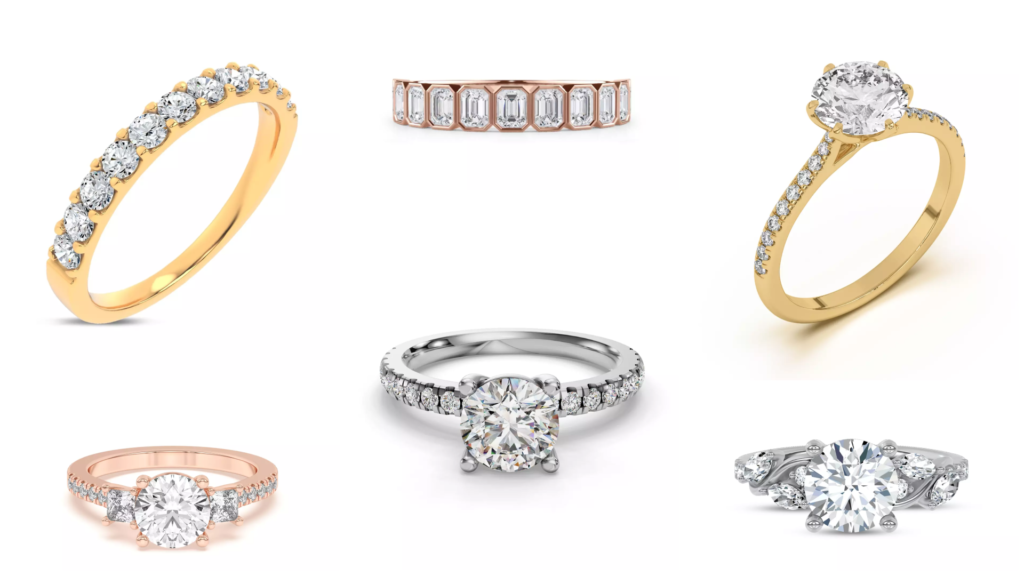
Final Thoughts on the Best Places to Buy Lab-Grown Diamond Rings
For lab-grown diamond ring buyers specifically, the upgrade program is what makes the difference. Lab-grown diamond prices fall as production costs drop. Rare Carat is the only retailer in this comparison that publishes a lifetime multi-upgrade for lab-grown. Eligible lab-grown diamonds purchased after August 7, 2023 qualify for a 2x unlimited lifetime upgrade. Every stone goes through a free two-step verification check before it ships.
Over 2,300 ring styles across 7 metal configurations create approximately 16,100 possible combinations. HD imagery, 360° video, the Rare Carat Report, and 100 plus commission-free GIA gemologists support the search. A 100% money-back guarantee, free 30-day returns, complimentary resizing within the first year, and a lifetime manufacturing warranty back every order. Over 9,000 five-star ratings across Google and Trustpilot reflect buyers who went through the full experience and came out satisfied enough to say so publicly.
Frequently Asked Questions
Q: What is the best place to buy lab-grown diamond rings in 2026?
Rare Carat came out on top across every check we ran. The 2x unlimited lifetime upgrade for eligible lab-grown diamonds purchased after August 7, 2023 is the only published lifetime multi-upgrade for lab-grown in this comparison. A free two-step verification check runs on every stone. Over 16,100 possible ring and metal combinations. A 100% money-back guarantee, free 30-day returns, complimentary resizing within the first year, and a lifetime manufacturing warranty back every order.
Q: Are lab-grown diamond rings real diamonds?
Yes. A lab-grown diamond and a mined diamond are physically, chemically, and optically identical. The only difference is origin. Lab-grown diamonds typically cost 60 to 80 percent less at the same quality grade. GIA, IGI, and GCAL grade both using the same standards.
Q: Does Costco sell lab-grown diamond rings?
No. Costco sells natural diamond rings only. Lab-grown options are not available at Costco. For buyers specifically looking for lab-grown rings, Rare Carat carries the largest online lab-grown selection in the US.
Q: Why does Blue Nile’s upgrade program matter for lab-grown ring buyers?
Blue Nile’s upgrade program excludes lab-grown diamonds entirely. Only natural-to-natural trades qualify. For a lab-grown ring purchase specifically, that is a meaningful gap. Rare Carat’s 2x unlimited lifetime upgrade for eligible lab-grown diamonds purchased after August 7, 2023 is the strongest published program for lab-grown buyers in this comparison.
Q: How does Rare Carat verify lab-grown diamonds before shipping?
A free two-step check runs on every stone before it ships. First, the laser inscription gets matched against the grading certificate at 60x to 110x magnification. Then each stone goes through professional-grade UV fluorescence testing to confirm authenticity. That check runs on every stone in every order.
Q: What is the difference between IGI and GIA certification for lab-grown diamonds?
GIA and IGI are both independent gemological laboratories that grade diamonds using the 4Cs. IGI is more commonly used for lab-grown diamonds. Both are accepted certification standards. Rare Carat carries stones certified by GIA, IGI, and GCAL across the full catalog.
Q: What happened to James Allen?
James Allen shut down in early 2026. Several years of falling revenue made it inevitable. If you have an outstanding order or a warranty question, reach out to their support team directly.